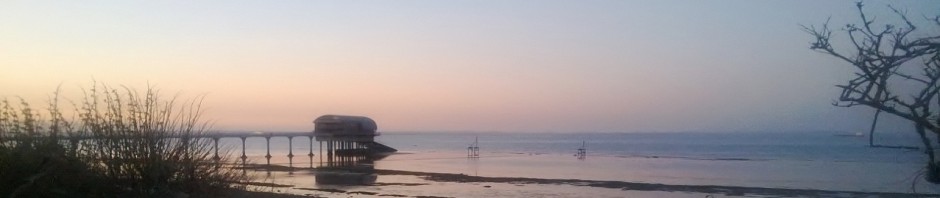
We are like waves in the ocean—ever-changing, inseparable movements of a seamless indivisible whole, and every wave includes the whole ocean. This one bottomless moment is ever-changing in appearance while never departing from the ever-present immediacy of here-now. The appearances vanish automatically as soon as they appear—they self-liberate as some traditions say—and there is peace in the simple immediacy of being alive, just as we are.
Thought poses as “me” and claims to be the thinker-chooser-doer, but no such entity can actually be found. Our thoughts, behaviors and apparent choices arise as movements of the whole. When we take it all personally and believe that we are small and separate and in control of our lives, feelings of deficiency, anxiety, guilt, blame, confusion and dissatisfaction inevitably follow.
Liberation from this kind of suffering can never happen in the future. It can only happen now, in the simple recognition that absolutely nothing needs to happen or not happen. Both the apparent suffering and the one who longs to be free are ephemeral appearances with no actual substance. All there is in every passing wave of experience, however it may appear, is the seamless indivisible ocean…Realizing the choiceless and impersonal nature of everything that happens frees us from guilt, blame, false pride, and many other painful and destructive feelings that arise when we believe that we are separate and in control of our lives, and that everyone else is in control of their lives, and that we all could and should be doing a much better job. Recognizing the impersonal nature of everything gives us compassion for ourselves and everyone else when we fall short of our ideals.
We could say that the whole movie of waking life, including the central character we identify as “me,” is very much like a nighttime dream, and in a dream, the dream character is not writing or directing the show. The dream character doesn’t even really exist. The entire dream world is a movement of the dreaming consciousness, and none of the apparent objects or events exist outside of the dream. Or, alternatively, we could say that everything that happens is the result of infinite, interdependent causes and conditions. But any way we describe, map or formulate the living actuality is only a map or a description…Unicity is eternal, which means timeless, ever-present, NOW. It is infinite, which means all-inclusive, boundless, limitless, HERE. This NOW-HERE is all there is. Have you noticed? There is no way to step outside of this. It cannot be objectified, although any words we use to point to it do seem to do just that, so we have to use words lightly. We habitually want something to grasp, something to hold onto, but in holding on to nothing at all, there is immense freedom…
Joan Tollifson, Liberation Here-Now
What we are, as waves on the ocean – or in Spinoza’s terms, modes of the one substance, God – is no more than the flickering of wavelets, a brief appearances that is gone, all but traceless across open water. And yet the wavelets are water; they are not other than the ocean itself; they don’t come from water, they are water.
Finally, the heart opens in the quiet. There is nothing to achieve, nowhere to go. To sit still is all we have ever needed: to sit still in the one place, which is now.
But as Tollifson goes on:
I’m never suggesting that we can or should ignore or dismiss the everyday relative dimension of reality. It’s real enough. But when we know it for what it is, it can be experienced in a different way, with much less suffering and more ease. And in the bigger picture, every mistake and every apparent imperfection is perfectly placed. There’s no way to get it wrong. There’s no “me” separate from the whole.
And this is never what we think it is, because thought conceptually divides, abstracts and freezes what is actually indivisible, immediate, and never the same way for even an instant. And yet, even thinking, conceptualizing, abstracting and dividing are also nothing other than unicity showing up as apparent thinking, conceptualizing, abstracting and dividing. The map is not the territory it represents, and yet, mapping is something the territory is doing. All there is in every passing wave of experience, however it may appear, is the seamless indivisible ocean.
What a huge relief!
 An Open Ground