Category Archives: Philosophy and phenomenology

Radical negation

[R]adical negation and the deliberate use of unlike likenesses will characterize our apophatic speech… the language of unknowing. Inadequate words – all words, that is – are not only to be unsaid but unlearned, unknown.

…We are not to think of the kind of ignorance that just refers to a lack or deprivation of knowledge; that is like the kind of darkness that can be dispelled by light. Just as there is a higher darkness at the top of Sinai, a pregnant and shining darkness, so there is another kind of ignorance, a holy unknowing that transcends our knowing of all that is knowable… Whereas negation or unsaying is a process, a continual practice along the whole of the ascent (or, in the more passive language these texts [of the Dionysian corpus] prefer, the process of being ‘lifted up’), unknowing not only describes the repeated decision ‘not to know’ ideas along the way but also, and more often, a state of being, the mental state of one who has come into the cloud atop Sinai. If God is beyond knowledge, then unknowing is the state of mind in which we meet him…

So unknowing is different from ignorance, both in that it knows it cannot know and also in that it has gone beyond knowledge, has digested the wisdom of knowledge about God’s activities all the way up to their highest point, and has kept itself free of entanglement in concepts. In the state of holy unknowing, the mind is not a blank: it is full of wonder and glory.

JP Williams, Seeking the God Beyond: A Beginner’s Guide to Christian Apophatic Spirituality, p.87

Radical negation is not radical negativity: in fact it is the diametrical opposite of that. Only by telling of what is not, only by unknowing all we thought we knew of God, can we know God.

There is nothing we can say of God that is not less than God; and if we are to step out onto the mountain with Elijah (1 Kings 19) everything we knew of God turns out to be empty. Only in the hollowing out of what actually is can we find the silence of God, who is the ground of being itself; and that is what prayer is for.

Solitude and unknowing

Like sight, knowledge depends on an element of duality. Grammar distinguishes the ‘knower’ from ‘the object of knowledge’. Aside from the fact that the Creator of all cannot be any kind of ‘object’, the divine activity of ‘onyng’ [Julian of Norwich] finally removes the ground from under any duality. The soul’s ‘solitude’ is not necessarily a denial of divine presence; when it is united with God, there are not two beings to count. Peace and holiness are ‘held at no remove’, as John [of the Cross] says. In so far as the soul speaks at all there, it stammers, tripping itself up, disrupting its own saying.

Apophatic teachers therefore use the language of unknowing to mean something that is the opposite of blank ignorance. It signifies both an emptiness, an absence of anything that the mind can catch and hold on to, and also a fullness or excess – the heart and mind so filled with the vivid and dynamic life of God that there is no space or time left over as a ground for observation. The cloud of unknowing is not the same thing as God or union; it is a place of vulnerability where the divine may meet us. The beloved is sometimes present in the Shulamite’s chamber but sometimes there is only crushing absence there. We may climb to the top of the mountain but we can’t make God be there for us: that is a matter for grace.

JP Williams, Seeking the God Beyond: A Beginner’s Guide to Christian Apophatic Spirituality, p.65

It is an odd thing we’ve found here, that we keep finding as our contemplative way unwinds. Language doesn’t desert is so much as it self-deconstructs as soon as we begin to use it of God. We can write of the mystical life – people have been doing it for thousands of years, one way or another; but their words come to bits, always. Hence koans; hence the strange antinomies of the Psalms.

Solitude is inevitable. What matters most is unspeakable, in any normal language. Even to those we love and trust the most we can’t say where we have been. The attempt leaves us floundering in the seashells and spindrift along the shores of speaking, where the waves of Presence have washed us up, breathless and flattened in the sea wind.

The trouble is that we can’t really even think of God, not in any normal way, since discursive thought, like the language it uses to explain itself to itself, slices things up. That may not be too bad when it comes to things (though it can too easily divide what is indivisible) but it fails spectacularly with God, who is no thing. That’s why the author of The Cloud of Unknowing wrote, “Therefore I will leave on one side everything I can think, and choose for my love that thing which I cannot think! Why? Because he may well be loved, but not thought. By love he can be caught and held, but by thinking never.”

God, who is no thing, is not a being: ‘he’ is the very ground of being itself, isness (Istigkeit) before anything is. Only in incarnation can he be touched by us frail things of flesh.

Acceptance and integration

I have written much here about acceptance – including particularly Tara Brach’s concept of radical acceptance – and it seems to me one of the keystones of any contemplative practice. To accept the circumstances of our life, the time and place of our birth, our age and our state of health, the changing seasons… this is a way of being that underlies whatever peace and stillness we uncover.

Integration, the goal of so much psychotherapeutic theory and practice – most obviously in the Jungian tradition – is the core process of individuation, where hidden, unconscious parts of the mind – the shadow, the anima or animus, repressed or concealed complexes – are brought into conscious awareness to create a unified, whole self: the endpoint of healing.

Acceptance is key to integration, also: it is not possible to bring into open awareness these intensely charged unconscious materials without acceptance. To accept oneself, all of oneself, as at its heart given (see Martin Heidegger’s Geworfenheit for instance) is the beginning of our inner work, and its fruit.

All that we are is given to us, in its iridescent, changing beauty. The necessity of what is remains, but it is in a sense a contingent necessity. Our response is ours to make: to remain still and watch is the beginning of radical acceptance – Heidegger’s Gelassenheit if you will – and a fundamental surrender to isness itself. In hesychasm the principle of synergia – the cooperative working together of free will and grace – is perhaps the deepest human level of integration.

To sit still, just that, is the beginning and the end of practice. There is nothing else to do, nothing else is needed. The ground opens in this moment: there is nothing else, nowhere else to go.

Grace?

Grace? But wouldn’t it be simpler just to call these experiences [of unsought peace and illumination] moments of grace? For that is what they are, aren’t they—times when God suddenly touches our lives with his blessing and renews us from the center of his own bottomless abundance?

Well, yes, that is quite true. Grace and mystical hope are close synonyms, and the outward effects are virtually identical. A person under the sway of grace and a person connected to the flow of mystical hope will display the same qualities of joy, gratitude, and a lightness and fullness of being even in the face of apparent reversal and defeat. Outwardly, they are dead ringers for each other, and even inwardly I believe they resonate with the same experience.

But words also have connotations, and this is why I make the distinction between grace and hope. For over the theological centuries calling an experience “grace”… has come to connote something extraordinary and uncharacteristic: an infusion of divine sustenance into our lives as a special gift from God, given with God’s own timing and discretion. Such a notion is consistent with the traditional theological viewpoint, where it seems that the first priority has always been to affirm the sovereign freedom of God and God’s role as sole initiator. Using the term “grace” tends to lock us back into those traditional categories and allows us to go sailing right by the distinction I really want to highlight.

For in overemphasizing this divine freedom it is all too easy to understate and miss that hope is not intended to be an extraordinary infusion, but an abiding state of being. We lose sight of the invitation—and in fact, our responsibility, as stewards of creation—to develop a conscious and permanent connection to this wellspring. We miss the call to become a vessel, to become a chalice into which this divine energy can pour; a lamp through which it can shine.

But what if we are intended to become this vessel, this body of hope? What if, in fact, this effervescent, “lightness-of-being” energy is the fuel that drives our human life toward its divine fulfillment? What if our insistence on treating it as a rare and exceptional phenomenon is a way of ducking the invitation that was permanently extended [John 4:1-42] at the Samarian well that blazing midday?

Cynthia Bourgeault, Mystical Hope, p.16

I have often stumbled over this word grace myself. There is so undeniable a sense of givenness about so much of the inner life that it is hard to evade the expression. We may practice faithfully for weeks, years, and yet illumination comes unsought, unexpected, often at what on the face of it might seem to be the most unpropitious of times. We may be overwhelmed with loss, with grief and regret, and suddenly the sky will open and we are flooded with peace and acceptance like a shaft of unimaginable sunlight.

What is happening here? Of course it is tempting on the one hand to turn to theories of the bicameral mind, or of the collective unconscious, or on the other to conventional theological formulations of “[s]aving grace [as] the free and unmerited operation of God’s person and presence… initiat[ing] the spiritual life of God’s people” (The Gospel Coalition). But neither extreme seems even to begin to reflect the wonderful lightness of being, the openness and clarity, the sheer sense of gift that comes so unexpectedly, so seemingly undeservedly. There is a profound mystery here, in the true sense of the term.

You may have noticed that [these] experiences have one thing in common: they all catapult us out of ego-centered consciousness. Those who come back from a near-death experience bring with them a visceral remembrance of how vivid and abundant life is when the sense of separateness has dropped away. Those who fall profoundly in love experience a dying into the other that melts every shred of their own identity, self-definition, caution, and boundaries, until finally there is no “I” anymore—only “you.” Those who meditate go down to the same place, but by a back staircase deep within their own being.

Ibid. p.47

One thing that all Bourgeault’s examples have in common with my own is this inherent quality of wordlessness. Of course in order to know something conceptually we must use words, if only to ourselves, and so these experiences of grace are clouded over with unknowing. And yet it is only in surrendering to not knowing that we can receive them – which may be why they are so often received in extremis. “Ego-centered consciousness” is mediated by thought, and thought by words; defeat words, and thought drops away from itself. What is left is silence.

I think this wordless silence is itself the back staircase; and there is an argument to be made that all forms of contemplative practice – and, phenomenologically, such things as near death experiences – are no more, at the very bottom, than means of silence. The heart yearns for silence, especially in the depths of its passions; at the end of all things there is silence, and it is out of silence that all things come to be. Silence is the utter want of naming, of distinctions; it is no thing, but it is given to us as our only home at the end of all we know.

Being present to death

Now is the only moment we will ever know. Our memories of the past are experiences in the present. So are our thoughts about the future. So when we talk about not being present, we mean our attention is not on the present moment. It is focused on thoughts about the past or future.

We can be present in three ways. First, we can live for today, not worrying about yesterday or about what tomorrow may bring…

A second way, common to many meditation practices, is being aware of our current experience. Whereas most of our thoughts are about the past or the future, our sensory experience is always “now.” This is why basic meditation techniques often focus the attention on the body — the heartbeat, the breath, or some other sensation. The feelings in the body are always in the present.

And there is a third way of being present that can develop from this: being present to how it is to be present — not so much noticing your experience of the moment but noticing how it feels to be in the moment…

Savoring how it actually feels to be present motivates us to return here more often. As we do, the familiar, delightful feeling of being here now becomes a beacon drawing us home.

Peter Russell, Letting Go of Nothing

Death, it seems to me, is not a mishap or some kind of failure; it is as much a part of what we are as birth or love. It is not a horror to be evaded at the cost of our health, our happiness, our kindness; it is, as Hamlet half-suspected, really a consummation devoutly (but not impatiently) to be wished – a consolation for all ills, a reward for patience and a gentle homecoming at the close of day. It is a gift to be received alertly and with grace.

One of the blessings of growing old may be that it is harder by the day to forget that death is common to us all, without exception. Being present to one’s own death – whether in prospect or in actuality – may be perhaps the greatest liberation available to us.

In being present, though, one must as Russell says be present to presence itself – only so, I’ve found, is it even possible to know death for what it is, our oldest friend.

What is this light?

In the west today, we are very interested in what consciousness (our field of awareness) can reveal when focused on the external world. For instance, if we focus our awareness on plants we can build a system of botany, and if we focus it on rocks we can build a system of geology. But mystics of all traditions have been interested in what we might call the nature of consciousness itself. What is this light inside our heads that the philosopher Colin McGinn has called the “mysterious flame?” In the same way that we acknowledge an external world to be explored, mystics have recognized an internal wilderness, also to be explored—and with rich reward…

To use an analogy, in the west we’ve traditionally or habitually assumed that consciousness operates like a standard light switch on the wall; it can be turned either on or off, and so we are awake during the day and “off” during the night. However, in the mystical traditions, it’s believed that consciousness can vary greatly, functioning more like a dimmer switch; that is, the “light” of our consciousness can be turned “on” but it can also be turned “up,” increasing its luminosity.

Dana Sawyer, The Perennial Philosophy Reloaded: A Guide for the Mystically Inclined, pp.28-29

Despite a blossoming in recent years of academic research and discussion (Daniel Dennett, Anil Seth, Susan Blackmore, Phillip Goff, David Chalmers and many others) consciousness remains a difficult field to study:

What is consciousness? This may sound like a simple question but it is not. Consciousness is at once the most obvious and the most difficult thing we can investigate. We seem either to have to use consciousness to investigate itself, which is a slightly weird idea, or to have to extricate ourselves from the very thing we want to study. No wonder philosophers have struggled for millennia with the concept; and for long periods scientists refused even to study it. The good news is that, in the 21st century, ‘consciousness studies’ is thriving. Psychology, biology, and neuroscience have reached the point where they are ready to confront some tricky questions: What does consciousness do? Could we have evolved without it? Is consciousness an illusion? What do we mean by consciousness, anyway?

This does not mean that the mystery has gone away. Indeed, it is as deep as ever. The difference now is that we know enough about the brain to confront the problem head on. How on earth can the electrical firing of millions of tiny brain cells produce this—my private, subjective, conscious experience?

Susan Blackmore, Consciousness: A Very Short Introduction, p.1

The weird idea of using consciousness to investigate itself is precisely what I have been up to for most of my life, despite being distracted by the need to earn a living, and confused by the persistent claims of religion to have a corner on the field. As Blackmore herself knows (see her delightful Zen and the Art of Consciousness) what might broadly be called mystical experience is precisely this: the direct encounter of mind itself with mind itself.

It won’t have escaped my readers that this is also a decent definition of phenomenology; Martin Heidegger, following his mentor Edmund Husserl, makes this quite clear, as does, especially, Maurice Merleau-Ponty:

Consciousness is not behind the body—it is in the body. This is Merleau-Ponty’s radical idea: To perceive is already to act. To act is already to understand. This destroys the mind/body divide far more thoroughly than Descartes ever anticipated.

Robert Flix, Merleau-Ponty in Plain English: Understanding Perception, Embodiment, and Experience, p.75

The point here is one that contemplatives of all traditions would recognise: mind and body, body and being, are a unified field. What occurs in one occurs in the others – not that they are “others” – and primary awareness holds the field just as it is, without the fragmentation to which our everyday mind has become so accustomed.

Contemplative practice – of whatever kind, it seems to me – acknowledges this unity as axiomatic, somehow. We sit, we breathe, we are aware of sounds and of our own weight, and our direct awareness of this awareness allows us to step from observer to observed and back in one epoché in which the distinction collapses into illumination. As Eve Baker puts it so clearly in her own slightly different context:

The solitary is the bearer of the future, of that which is not yet born, of the mystery which lies beyond the circle of lamplight or the edge of the known world. There are some who make raids into this unknown world of mystery and who come back bearing artefacts. These are the creative artists, the poets who offer us their vision of the mystery…

But there are also those who make solitude their home, who travel further into the inner desert, from which they bring back few artefacts. These are the contemplatives, those who are drawn into the heart of the mystery. Contemplatives have no function and no ministry. They are in [that] world as a fish is in the sea, to use Catherine of Siena’s phrase, as part of the mystery. That they are necessary is proved by the fact that they exist in all religious traditions. Contemplatives are not as a rule called to activity, they are useless people and therefore little understood in a world that measures everything by utility and cash value. Unlike the poet they do not return bearing artefacts, but remain in the desert, pointing to the mystery, drawing others in.

Paths in Solitude, pp.10-11
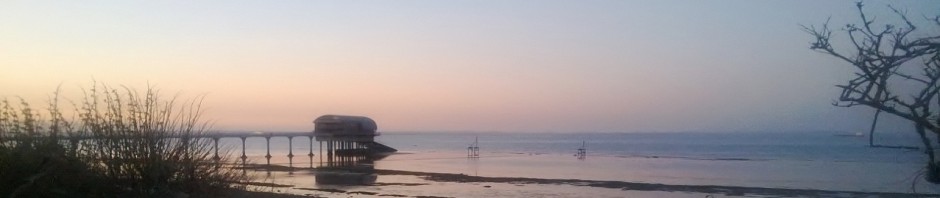
Part of the mystery

The solitary is the bearer of the future, of that which is not yet born, of the mystery which lies beyond the circle of lamplight or the edge of the known world. There are some who make raids into this unknown world of mystery and who come back bearing artefacts. These are the creative artists, the poets who offer us their vision of the mystery… But there are also those who make solitude their home, who travel further into the inner desert, from which they bring back few artefacts. These are the contemplatives, those who are drawn into the heart of the mystery. Contemplatives have no function and no ministry. They are in [that] world as a fish is in the sea, to use Catherine of Siena’s phrase, as part of the mystery. That they are necessary is proved by the fact that they exist in all religious traditions. Contemplatives are not as a rule called to activity, they are useless people and therefore little understood in a world that measures everything by utility and cash value. Unlike the poet they do not return bearing artefacts, but remain in the desert, pointing to the mystery, drawing others in.

Eve Baker, Paths in Solitude, pp.10-11

As Steve Taylor writes: “However, awakened people travel lightly and transition easily. They perceive their existence as part of a vast network of being that will continue to flourish without them. They feel that they share their identity with the whole of the network, that something inside them is part of everything else.” The contemplative life is not a one-way relationship, as so often imagined by religious dogma. Sitting still, we find ourselves part of the unknowable ground as waves are part of the ocean: not other, and yet not exactly one with.

To live as part of the mystery, fully aware of our partial and temporary nature, might seem from an observer’s point of view a kind of death. In fact it is in truth a kind of death. The notion of ourselves as finite, detachable entities cannot live long in the desert. That is why we go there, into the desert of the heart. As Eve Baker puts it (ibid.), “The desert to which the solitary is called is not a place, but something that must be there below the surface of ordinary human existence. It is nowhere, a place of thirst…”

So much of this life is apophatic: we find ourselves in a trackless land, unknowing; what we are is no thing: in that we are part of the ground itself, nothing more. What else could we long for?

Small things

I feel like I’ve written about the idea that God does not coerce but instead lures us toward greater justice, beauty, and etc a few times already. So rather than focus on this, or indeed the relational nature of the text [Matthew 10:40-42], I want to point out that process thought insists that every small thing is important.

In fact there are no ‘big things’ really – only collections of ‘small things’.

Everything is made up of cells, cells are made of atoms, atoms are made of sub-atomic particles which are sites of movement and energy. Solid things are largely made up of energy. Solidity itself is something of an illusion.

So yes, the reality we experience around us is, largely, an illusion. That ‘tree’ you can see over there is actually mainly energy, it is also a large group of small things, working together to be a tree. In that sense a ‘tree’ is a ‘society’, or even a ‘society of societies’ – we just think of it as an individual thing because that’s how it looks to us. In reality it’s nothing of the sort. And of course, the same is true of you, and the same is true of me. We are very complex, very sophisticated, societies. We contain multitudes, as Walt Whitman put it. Apart from anything else, you currently contain something like a kilogram of bacteria in your internal organs. Good luck living without them.

So here we are encouraged not to despise ‘the day of small things’ – even the smallest act of care has a real impact. Offering someone a glass of water is not ‘just’ symbolic of an alignment with their cause, it’s also a real piece of participation in the constantly evolving web of relations.

It’s part of that idea: “for the want of the nail the shoe was lost, for the want of a shoe the horse was lost, for the want of a horse the battle was lost…” The smallest things, the most insignificant things, have real importance.

So here the writer imagines a network of households choosing to offer welcome to emissaries of Jesus, small things, vulnerable things. Moment by moment choices that shape the future. Depending on how you look at it, that’s either a deeply encouraging idea, or a terrifying one.

Simon J Cross

For as long as I can remember I have been fascinated with small things – the spray of stamens on a Rose-of-Sharon, a harvestman resting spread-eagled on a brick wall beneath a windowsill, the tiny black bristles at the corner of a sparrow’s bill – these have seemed to me more precious, more freighted with meaning, than the ambitions of men.

The reality of things is relationship. Nothing can be without other things; that there are things at all depends on their relations one with another; depends, ultimately, on the ground of being itself.

TAO engenders One,
One engenders Two,
Two engenders Three,
Three engenders the ten thousand things.
The ten thousand things carry shade
And embrace sunlight.
Shade and sunlight, yin and yang,
Breath blending into harmony.

Laozi, Tao te Ching, tr. Addiss and Lombardo, ch.42

Thought cannot embrace the quantum fields in which things consist: theoretical physics can learn about them to some degree, but to know reality at its fundamental level is impossible for the rational mind. Unknowing, remaining still, we can perhaps touch the skirts of this unseen world. All that is, we are; in the quiet, that we can know as we know a lover’s breathing. In the quiet, we can come home to that.

Gratitude and presence

Perhaps the most notable overall change [in the awakening mind], though, is a general sense of well-being. In the same way that the taking for granted syndrome inevitably leads to frustration and dissatisfaction, ongoing gratitude leads to contentment and fulfillment. You will no longer crave things you don’t have or need, since you’re now able to appreciate what you do have. You’ll be free of the constant niggling need to add more to your life or to change your life situation, like an addict who is finally free of the craving for drugs.

You will also feel an enhanced sense of presence. In chapter 1, I mentioned that many qualities of wakefulness are interdependent, and this is particularly true of presence and gratitude. Gratitude brings us into presence, and presence creates gratitude. Our blessings are always in the present, whereas the taking for granted syndrome takes us out of the present, into imaginary future scenarios.

You might wonder: Is it actually possible to live in an all-encompassing state of gratitude, continually aware of the myriad blessings in our lives? But we don’t have to extend our gratitude so widely all the time… Gratitude should be a constant, underlying trait that arises organically in relation to our experience. And when we do have free moments of contemplation, we will naturally find ourselves extending our gratitude more widely, to encompass all of life itself and the Earth.

We should also remember that, as suggested in chapter 1, it’s unrealistic – and even unnecessary – to live in a perpetual state of spiritual ecstasy. Of course, we often have to focus our attention on practical tasks, such as driving or cooking or earning a living. In those practical moments, our sense of gratitude may recede from our awareness. But it will always be in the background, naturally arising when we relax our attention. This applies to all the other qualities of wakefulness… in general.

Steve Taylor, The Adventure: A Practical Guide to Spiritual Awakening. pp.51-52

Steve Taylor’s point about presence and gratitude is an important one. In sitting still, there is nothing, apart from the continual drift of thoughts, to distract us from the fact of our sitting, the weight of our body, the scatter of sounds in the background, the blessed pattern of our breathing. What we are is here, now, in this place and instant – and that is not other than the open ground itself, present before and beneath the space and time in which we live and die.

As Eckhart Tolle frequently points out, presence is in some way analogous to waiting: to wait with full alertness is to be fully present, fully attentive to what is. “Beyond the beauty of the external forms, there is more here: something that cannot be named, something ineffable, some deep, inner, holy essence.” (The Power of Now, p.96)

To be fully present is to be finally free from the constant burden of the little self – defensive, grasping, threatened – that keeps us from our own life, from the gratitude that is our true relationship with what actually is. To sit still in the silence of our heart is to be present at last, in the “ineffable… holy essence” that is our home.

The actually loved and known

The contemplative life is not in fact about ideas at all, really. It is far more practical, even down-to-earth, than that. In a sense, the contemplative doesn’t care about constructing a metaphysical framework. What happens is merely experience. When a person enters the stillness of “awakened” consciousness, the rigid boundaries of the self drop away. The immediate, felt reality of that state is precisely one of mutual indwelling.

In that state, we don’t look at nature; we are in nature, and nature is in us. We don’t so much sympathise with another person’s suffering as we experience our existence as continuous with theirs. Charles Williams’ coinherence becomes simply a description of what it actually feels like when the ego’s filtering mechanism relaxes – when Huxley’s doors of perception drift open of themselves.

All that we are consists in our relationship with all that is; not in an abstract sense, but in vital, lived reality. When the boundaries of the self are fully defended, this is no more apparent than the atoms that constitute the hands typing these words; but the function of the contemplative mind is to dissolve those boundaries to little more than a fitful mist across what is. Each one of us is in fact infinitely permeable, and infinitely, intricately conditioned. We reflect each other, and are reflected, like dew drops in a web of uncountable dimensions, bright with the light of the isness from which they emerge. It follows that what each of us does or thinks or feels, in the minutest degree, affects all others, human or otherwise, sentient or not. And so we are ourselves affected, from the least to the farthest.

To know this, and yet to sit still, is in some way the greatest gift. “The ‘pristine awareness’ that is the fundamental ground itself” (Stephen Batchelor) holds all that is, the “ten thousand things” of the ancient Taoists: our sitting in some way brings them into that whole and healing light, despite ourselves. We cannot know it, cannot hold an image of it as we could hold a book or a glass paperweight; and yet unknown, it is most precious; not to be held, it is maybe the gift the world needs.

[*the title is taken from David Jones: “…[F]or only what is actually loved and known can be seen sub specie aeternitatis“]