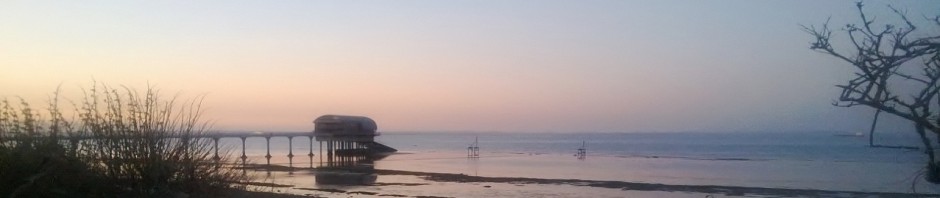
Fade into emptiness

[F]or a period of time each day, try to sit in shikantaza, without moving, without expecting anything, as if you were in your last moment. Moment after moment you feel your last instant. In each inhalation and each exhalation there are countless instants of time. Your intention is to live in each instant.

First practice smoothly exhaling, then inhaling. Calmness of mind is beyond the end of your exhalation. If you exhale smoothly, without even trying to exhale, you are entering into the complete perfect calmness of your mind. You do not exist anymore. When you exhale this way, then naturally your inhalation will start from there. All that fresh blood bringing everything from outside will pervade your body. You are completely refreshed. Then you start to exhale, to extend that fresh feeling into emptiness. So, moment after moment, without trying to do anything, you continue shikantaza…

Even though your practice is not good enough, you can do it. Your breathing will gradually vanish. You will gradually vanish, fading into emptiness. Inhaling without effort you naturally come back to yourself with some color or form. Exhaling, you gradually fade into emptiness—empty, white paper. That is shikantaza. The important point is your exhalation. Instead of trying to feel yourself as you inhale, fade into emptiness as you exhale.

Shunryu Suzuki, not always so

To the conscious self, emptiness will always feel like death. But in emptiness that which is unnamed, aside from words, is free for once. Elizabeth Reninger:

It may take weeks, months, or even years to unwind certain psychic or physical contractions and break free of old habits and beliefs. But unlearning and release can also happen in a single moment of aesthetic rapture, or with a deep belly-laugh from understanding a joke, or from the dizzying mental meltdown of fully grokking a paradox.

In such moments, we’re left in a “space” characterized by an unspeakably sweet kind of knowing, a spaciously vivid awareness that is sometimes likened to the experience of a mute person tasting candy. The only thing that we might be able to say is “Ahhh . . .”

Out of such moments—these gaps between thoughts—arise a natural innocence, curiosity, and spontaneity, along with the deepest kind of contentment. If only for a moment, we are at home.

Home is in fact the emptiness we so struggle against. The way things come to be, the patterns on the surface of the stream – they are only moments in emptiness, points of light on the water. There is no thing to find: the sweet essence itself is emptiness, inexhaustible, yet quite outside “is” and “is not”: the safest place there is.

A Lighthouse for Dark Times

It is during phase transition — when the temperature and pressure of a system go beyond what the system can withstand and matter changes from one state to another — that the system is most pliant, most possible. This chaos of particles that liquefies solids and vaporizes liquids is just the creative force by which the new order of a more stable structure finds itself. The world would not exist without these discomposing transitions, during which everything seems to be falling apart and entropy seems to have the last word. And yet here it is, solid beneath our living feet — feet that carry value systems, systems of sanity, just as vulnerable to the upheavals of phase transition yet just as resilient, saved too by the irrepressible creative force that makes order, makes beauty, makes a new and stronger structure of possibility out of the chaos of such times.

Cultures and civilizations tend to overestimate the stability of their states, only to find themselves regularly discomposed by internal pressures and tensions too great for the system to hold. And yet always in them there are those who harness from the chaos the creative force to imagine, and in the act of imagining to effect, a phase transition to a different state…

[But w]e too are living now through such a world, caught again between two ages, confused and conflicted, suffocating and suffering. But we have a powerful instrument for self-understanding, for cutting through the confusion to draw from these civilizational phase transitions new and stronger structures of possibility: the creative spirit.

Maria Popova, The Marginalian (with thanks to What’s here now)

Seamarks

The Buddha’s teaching was focussed on the one purpose of showing how to find the end of suffering. He identified the cause of suffering as the afflictions of ignorance and desire and set out a path leading to liberation from these afflictions. That path begins with the recognition of the need to train oneself. This arises from an inner prompting and an observation of how suffering touches everyone, that all things are impermanent and there is nothing substantial in which we can find true refuge. Next comes the need for an ethical life for ourselves so that we can know peace and tranquillity, and to help others, since through sympathetic understanding we realize that others suffer in the same way as we do.

Daishin Morgan, Sitting Buddha

The Buddha did not found a religion – he taught a way of contemplation, a way out of the confusion and panic that so much of human life seems to consist in, where we know that even the pleasures and satisfactions we seek so desperately are spoilt by our fear of losing them even in the instant they are grasped.

The Buddha taught that suffering is caused by misreading our senses and interpreting the data in a manner that suggests an “I”. It seems as though stuff happens to “me”. I have the impression of being one thing and the world around me another thing. I am drawn to seek pleasure and avoid pain. This basic motivation has its roots in the feeling of an “I” set against the world…

In questioning the basic assumption that this “I” is real and permanent, Buddhism teaches that the “I” we treasure has no independent existence of its own and cannot exist without everything else being the way that it is. All of existence is interdependent so to view the “I” as a separate thing is an illusion.

Morgan, ibid.

In these realisations there are no gods or demons, and no angels or prophets either. The Buddha taught simply, “Verify for yourself whether what I teach corresponds with the truth…”

Philosophical Taoism is not a religion either. Neither in Laozi nor in Zhuangzi can we find a pattern of worship or a dogma laid down, though there are plenty of references to the gods of traditional Chinese folk religion. It is more an approach to metaphysics than a faith, and its ideal is the person of wisdom and understanding rather than devotion.

In the thousands of years these teachings have been knocking around human history, they have accrued countless superstitions and religious structures and rituals; but none of these is more than tradition and observance. The central philosophy, and its roots in practice, may evolve; but they remain praxis, not doctrine.

It seems to me that contemporary, largely humanist, understandings of contemplative spirituality are a vital next step in being able to “verify for [ourselves]”. Writers like Tara Brach, Sam Harris, Toni Bernhard and Susan Blackmore likewise are not looking for followers, but trying to pass on the fruit of their own experience. Each generation seems to find its own contemplative language, and each of us has our own small measure of responsibility in carrying that forward; in sharing, directly or indirectly, some of the seamarks we have noticed on our own voyages. No one else can do it for us…

Altered states?

Whether the technique is narrative or not, the primary experience [what the senses, or the dreaming mind, actually perceive] has to be connected with and fitted into the rest of experience to be useful, probably even to be available, to the mind. This may hold even for mystical perception. All mystics say that what they have experienced in vision cannot be fitted into ordinary time and space, but they try – they have to try. The vision is ineffable, but the story begins, “In the middle of the road of our life . . .”

Dreams Must Explain Themselves: The Selected Non-Fiction of Ursula K. Le Guin

This is a problem – if that is the right word for it – that I have run into myself. Direct contemplative experience is, by definition, an altered state of consciousness: it is not in itself accessible even to the rational mind. Andreas Müller explains:

All there is is oneness. The unknown. No-thing appearing as it appears. It is already whole. It is already complete. That which seems to be missing – wholeness – is not lost…

What remains is indescribable. It is indescribable simply because there is no one left who can describe it. There is no one left who experiences oneness (which, by the way, would then not be oneness anymore) and could possibly know how that is. Yes, there is no one left who knows how it is. That is freedom.

As Le Guin points out, if we want to talk about our experience, even to think about it, it must be recast into something approaching narrative. This has an odd effect; what happens is that something which occurred, subjectively speaking, outside time (i.e. without duration) has to be described – thought of, even – as though it had a beginning, a middle and an end. Even in poetry this is true, though that is perhaps rather less obvious!

There is no way around this, I think. Primary experience has to be experienced; it can’t be explained, or taught. What can be explained, and taught, is the practice that makes a place for the possible. Nothing we can do can cause these experiences; all we can do is try our best to remove obstacles to their occurring. (This, of course, is the great temptation of psychedelics: swallow 250 microgrammes of LSD, and something will happen, whether you like it or not. And God help you if you don’t.)

From a time-bound perspective, one may spend a long while in regular practice without any alteration in one’s state of consciousness, except perhaps a certain gradual progressive loss of identity and increasing confusion, which can be distressing and even scary. Illumination per se is something that occurs, if it occurs, outside the practitioner’s life-time (I use the hyphen advisedly) altogether. It has no narrative. Nothing can compel this occurrence, and in any case – and this is important – it is not something one can, or should, regard as a goal. The practice is the goal, in itself; nothing more nor less than that. It is the practice that reveals the open ground, the Tao – and this entirely without drama, without altered states of anything. But – practice, effective contemplative practice, is not a narrative process itself. Though you can set a timer for 20 minutes or half an hour, time is not something that applies to the practitioner’s subjective experience. Just sitting, the way we do, is outside of story, outside of “and then, and then…” There is no Jones; and anyway, along where? Just sit still.

Trees

Sometimes I feel that Western philosophy, especially since the Enlightenment, has too often come to resemble the conifer plantations common to commercial forestry: useful, yes, and in their way productive, but almost barren, sterile. On the other hand, the philosophies surrounding Taoism – including Chan Buddhism and its Japanese descendant Zen – seem more like old growth forests, rich in natural diversity, fluid, resilient, fertile.

Of course it would be easy to romanticise such a distinction, as often seemed to happen during the early days of Zen’s growth in the West, and its influence on the Beat movement – Jack Kerouac’s The Dharma Bums being the obvious example. But the partitioning of Western academic philosophy into e.g. metaphysics, philosophy of mind, phenomenology and so on contrasts powerfully with more organic, experiential approaches.

I am no philosopher, needless to say, so in a sense I shouldn’t say such things; but I am someone most of whose intentional (c.f. Daniel Dennett’s idea of the intentional stance!) life has been given to a sort or sorts of contemplative practice, and so in a sense to the attempt at living out of some kind of philosophy or another. Over the years it has become clearer to me that “the Tao as an ontological ground… the One, which is natural, spontaneous, eternal, nameless, and indescribable… at once the beginning of all things and the way in which all things pursue their course” (Wikipedia) is just the simplest, least superstitious way to understand what is to be found in just sitting, apophatic meditation, or what you will. (The Sōtō Zen expression shikantaza, untranslatable as it is, is probably the closest I can get!)

So, sitting still, we can see that the self is not a thing but a pattern, not an object but a movement among the leaves, not other than the way things come and go. Just as sitting still is an entirely pointless thing to do, so too the Tao has no purpose. You couldn’t use it for anything, and yet it is before all that is, and holds the source of the farthest stars. Empty, all it is is inexhaustible.

Where all things return

The river, the Tao, the open ground, the source. These are all words, but no thing. Only things have beginnings, or ends. All things (and that includes cats, and people, and impossibly tiny bugs of all kinds) that exist, are. They have being; if they seem to share nothing else, they share that.

The Tao is no thing. It is not a substance. It is without dimensions, without duration, for you can only measure things; but it is. Isness, in fact, is what it is. It can’t have come from anywhere; there is nowhere it could lead. But it is where all things return, even you and I.

The way is empty,
used, but not used up.
Deep, yes! ancestral
to the ten thousand things.

Blunting edge,
loosing bond,
dimming light,
the way is the dust of the way.

Quiet,
yes, and likely to endure…

Tao te Ching, tr. Ursula le Guin

Just get on with it

Teachings can be most profound, but those who listen may not understand. Never mind. Don’t be perplexed over profundity or lack of it. Just do the practice wholeheartedly, and you can arrive at real understanding—it will bring you to the place the teachings talk about.

Ajahn Chah, Everything Arises, Everything Falls Away: Teachings on Impermanence and the End of Suffering, from an extract in Tricycle magazine

So often on the contemplative path we read different teachings, different people’s accounts of their own journeying, and we wonder, “Am I doing this right? Is there another way I should be walking? Would that work better?” and if we’re not careful we can find ourselves skittering off down another byway, wondering why nothing seems to work for us like it seems to for everyone else.

Really there is no problem. It has taken me years to realise this, but there is no teaching to find, no teacher to follow. There is just the practice. Teachings are good in themselves, but no teacher can teach anything more or less than she has come to experience herself. All she could do was practice, and it is all we can do ourselves.

Just sitting seems too easy. It isn’t. It is the hardest thing we’ll ever have to do; but it is also the simplest, and the loveliest. All the words come down to this: just get on with it.

Mistakes

Part of the wisdom of spiritual soulful self-presence is to be able to let certain aspects of your life alone. This is the art of spiritual noninterference. Yet other aspects of your life call urgently for your attention; they call to you as their shelterer to come and harvest them. You can discern where these wounds are in the temple of memory, then visit them in a gentle and mindful way. The one kind of creative presence you could bring to these areas is compassion. Some people can be very compassionate to others but are exceptionally harsh with themselves. One of the qualities that you can develop, particularly in your older years, is a sense of great compassion for yourself. When you visit the wounds within the temple of memory, you should not blame yourself for making bad mistakes that you greatly regret. Sometimes you have grown unexpectedly through these mistakes. Frequently, in a journey of the soul, the most precious moments are the mistakes. They have brought you to a place that you would otherwise have always avoided. You should bring a compassionate mindfulness to your mistakes and wounds. Endeavor to inhabit again the rhythm you were in at that time. If you visit this configuration of your soul with forgiveness in your heart, it will fall into place itself. When you forgive yourself, the inner wounds begin to heal. You come in out of the exile of hurt into the joy of inner belonging. This art of integration is very precious. You have to trust your deeper, inner voice to know which places you need to visit. This is not to be viewed in a quantitative way, but rather in a gentle, spiritual way. If you bring that kind light to your soul and to its wounded places, you can effect incredible inner healing.

John O’ Donohue, Anam Cara (with thanks to What’s here now?)

I have found recently that this process of discovery and forgiveness is something that has been happening, unbidden, in my own practice. Memories arise, and arise again, despite the usual recourse to the breath. Something like O’Donohue’s “inhabit[ing] again the rhythm you were in at the time” seems to take place of itself, and somehow through this sequence of arising and returning a healing appears to take place. For me, certainly, this is not a willed thing, by the way; it happens (I use the word advisedly) within the flow of practice, not in place of it.

I am aware of the tentative nature of my own words here. (Interestingly, I only stumbled across the passage from Anam Cara on the ‘What’s here now’ blog some time after the process had established itself, and found John O’Donohue’s description uncannily close to my own experience.) This is a delicate process, and not a thing I could ever have envisaged, still less willed, consciously for myself. (Initially, it appeared no more than a distraction.) The normal turning back to the breath, despite the sometimes overwhelming emotional energy of these memories, seems to accomplish something very like O’Donohue’s sense that “[i]f you visit this configuration of your soul with forgiveness in your heart, it will fall into place itself.”

The mistakes and their wounds of the past are unavoidable anyway. They happened: no amount of regret will change that. In any case, they were part of the sequence of cause and effect we have come to inhabit merely by the accidents of our birth and our place in history. The love that is inherent in the mindfulness of our practice was always waiting for just this chance; now at last it can do its own work of bringing us to rest.

Escaping to cool waters

Too often, seen from the point of view of mystical religion, with its sometimes mesmerisingly beautiful symbolisms and occasionally heroic asceticism, humanism can seem a grey, if worthy, doctrine – more suitable to university departments of sociology and politics than to contemplative experience. But that would be a mistaken view. So often, things – like love or pain – look very different from the outside than they are, lived, on the inside. AC Grayling describes humanism as,

an account of the better alternative to religion, the humane and positive outlook of an ethics free from religious or superstitious aspects, an outlook that has its roots in rich philosophical traditions, yet is far more attuned to our contemporary world, and far more sensitive to the realities of human experience, than religion is.

This is an outlook that the general term ‘humanism’ now denotes. It is an outlook of great beauty and depth, premised on kindness and common sense, drawing its principles from a conversation about the good whose roots lie in the philosophical debates of classical antiquity, continually enriched by the insights and experience of thinkers, poets, historians and scientists ever since. To move from the Babel of religions and their claims, and from the too often appalling effects of religious belief and practice on humankind, to the life-enhancing insights of the humanist tradition which most of the world’s educated and creative minds have embraced, is like escaping from a furnace to cool waters and green groves. I hope the latter is the destination of all humanity, as more people come to understand this ethical outlook as far the better alternative…

[It] is a beautiful and life-enhancing alternative outlook that offers insight, consolation, inspiration and meaning, which has nothing to do with religion, and everything to do with the best, most generous, most sympathetic understanding of human reality.

However reassuring a framework formal religion can provide for contemplative practice, the stifling effects of  dogma and the scriptural imperative can seem to weigh on the spirit like a heavy woollen hood. Grayling uncannily nails my own experience when he describes escaping to “cool waters and green groves.” Set free in this way, spirituality does not risk becoming the New Age pick’n’mix feared by the proponents of religious mysticism, but instead, as Sam Harris writes,

Spirituality begins with a reverence for the ordinary that can lead us to insights and experiences that are anything but ordinary… Yes, the cosmos is vast and appears indifferent to our mortal schemes, but every present moment of consciousness is profound. In subjective terms, each of us is identical to the very principle that brings value to the universe. Experiencing this directly—not merely thinking about it—is the true beginning of spiritual life.

Sitting by the window in the dusk

Sitting by the window in the dusk this evening, I kept being drawn back to listen to the rain. It connected itself somehow to my breath, drifted between patches of thought, drew me back to itself softly – trickling in the guttering, pattering in the trees, the shush and splash of tyres out on the road.

Pema Chödrön, writing in Lion’s Roar:

One of my favorite subjects of contemplation is this question: “Since death is certain, but the time of death is uncertain, what is the most important thing?” You know you will die, but you really don’t know how long you have to wake up from the cocoon of your habitual patterns. You don’t know how much time you have left to fulfill the potential of your precious human birth. Given this, what is the most important thing?

Every day of your life, every morning of your life, you could ask yourself, “As I go into this day, what is the most important thing? What is the best use of this day?” At my age, it’s kind of scary when I go to bed at night and I look back at the day, and it seems like it passed in the snap of a finger. That was a whole day? What did I do with it? Did I move any closer to being more compassionate, loving, and caring — to being fully awake? Is my mind more open? What did I actually do? I feel how little time there is and how important it is how we spend our time…

If you take some time to formally practice meditation, perhaps in the early morning, there is a lot of silence and space. Meditation practice itself is a way to create gaps. Every time you realize you are thinking and you let your thoughts go, you are creating a gap. Every time the breath goes out, you are creating a gap. You may not always experience it that way, but the basic meditation instruction is designed to be full of gaps. If you don’t fill up your practice time with your discursive mind, with your worrying and obsessing and all that kind of thing, you have time to experience the blessing of your surroundings. You can just sit there quietly. Then maybe silence will dawn on you, and the sacredness of the space will penetrate…

Another powerful way to do pause practice is simply to listen for a moment. Instead of sight being the predominant sense perception, let sound, hearing, be the predominant sense perception. It’s a very powerful way to cut through our conventional way of looking at the world. In any moment, you can just stop and listen intently. It doesn’t matter what particular sound you hear; you simply create a gap by listening intently.

I have come to love the noises through the window where I sit to practice. They are plain, familiar sounds: traffic, birdsong, the wind in the trees along the back of the garden, voices, the odd metallic clang from the yard by the old reservoir… Early in the morning, or on evenings like this one, they become their own lovely lacework realm of sound, intricate and nourishing, their texture as real as each breath, as the sensations of my body resting on the good floor. What more could one want than what is, in each instant that it’s heard? Everything is here; this precious instant is gift and grace; there is no next or before, and from that all healing springs.