Tag Archives: TS Eliot

Quietism, merely

I have written on several occasions before – most thoroughly perhaps here – about quietism on this blog. But what exactly is it?

Quietism, as a contemplative tendency – it is too diffuse in time and background to be called a movement – is usually described as “that [which], in general, holds that perfection consists in passivity (quiet) of the soul, in the suppression of human effort so that divine action may have full play. Quietistic elements have been discerned in several religious movements, both Christian and non-Christian, through the centuries…” (Britannica)

Quietism, despite having a chequered history among Christians – it was often spoken against as a way of passivity, an accusation levelled at Christian Quietists from the C12 Beguines right through to William Pollard and Francis Frith among nineteenth century Quakers – is a no more than a basic and essential practice of simple unknowing in most schools of contemplative life, from the early Taoists in China,  through the Zen pioneer Dogen’s teaching of shikantaza (just sitting) in thirteenth century Japan, to the philosophy of Jiddu Krishnamurti in the twentieth.

Of course in times of great peril and anxiety such quiet may seem an odd response, but as Andō pointed out in her post I reproduced yesterday, it may be the only true response. Hidden within the darkness and distress there is peace, and the coming light; but it can’t be seen from a place of fear and anger. From the standpoint of a febrile activism it truly appears not to be there. Only in absolute quiet, in an inward listening for the silence between appearances, can we touch the still point of the turning world (Eliot).

In some way that I struggle to explain in words, we deeply need those who, like Andō, have the courage to sit still in silence. To merely wait, hidden, in the “vast and shining presence” (Tara Brach) of what is, is perhaps the single most powerful thing that any of us can do.

Lenses, or doors

Phenomenology is useful for talking about religious or mystical experiences: we can describe them as they feel from the inside without having to prove that they represent the world accurately. For similar reasons, phenomenology helps physicians. It makes it possible to consider medical symptoms as they are experienced by the patient rather than exclusively as physical processes…

The point is to keep coming back to the ‘things themselves’ – phenomena stripped of their conceptual baggage – so as to bail out weak or extraneous material and get to the heart of the experience. One might never finish adequately describing a cup of coffee. Yet it is a liberating task: it gives us back the world we live in. It works most effectively on the things we may not usually think of as material for philosophy: a drink, a melancholy song, a drive, a sunset, an ill-at-ease mood, a box of photographs, a moment of boredom. It restores this personal world in its richness, arranged around our own perspective yet usually no more noticed than the air.

There is another side effect: it ought in theory to free us from ideologies, political and otherwise. In forcing us to be loyal to experience, and to sidestep authorities who try to influence how we interpret that experience, phenomenology has the capacity to neutralise all the ‘isms’ around it, from scientism to religious fundamentalism to Marxism to fascism. All are to be set aside in the epoché – they have no business intruding on the things themselves. This gives phenomenology a surprisingly revolutionary edge, if done correctly.

Sarah Bakewell, At The Existentialist Café: Freedom, Being, and Apricot Cocktails

Thinking and writing as I do about spiritual experience and practice carries with it at least one persistent difficulty: that of finding words for that which is by definition, almost, beyond words. When I confine myself to quasi-scientific language, shunning anything that sounds too “religious” or “woo-woo”, I all too easily find myself in a barren, materialistic wasteland, bereft of the living inwardness of actual experience. On the other hand, if I allow free rein to words like “God”, and “mystical”, it is almost impossible to avoid the “isms”, and the coloured lenses through which they force me to see, to describe even to myself, the inner landscape of the spiritual.

You see, sometimes religious terminology, whether Buddhist or, more seductively for me at any rate, Christian, seems to be the most appropriate – if not the only possible – language in which to discuss the spiritual. But then I find myself thinking in religious language, and before I know it I am experiencing my experiences as scenes in some sort of inner stained-glass window. I don’t merely describe them to myself in those terms: they actually arrive as those sorts of experiences, tinted and glittering with two millennia of resonant imagery.

Through the systematic procedure of ‘phenomenological reduction’, [Husserl teaches that] one is… able to suspend judgment regarding the general or naive philosophical belief in the existence of the external world, and thus examine phenomena as they are originally given to consciousness.

Wikipedia

If all is going according to plan, of course, one’s practice should provide the necessarily astringent antidote to general or naive isms of all kinds.  But in trying to write, I have to think; and if I think in the terms that I’ve adopted in order to write… you see the problem?

The danger – and it is a danger, not just an inconvenience – is that a disconnect may occur between the living, wordless awareness at the ground of things, and the view through the lenses that religious language, and all that that entails, have dropped between the experience and the experiencing mind. If this is not seen in time, then the usual remedies of mindfulness and attention may no longer work, and one may find oneself in a spiritual crisis, “often called spiritual emergency, awakening or psycho-spiritual crisis… a turbulent period of psychological opening and transformation”, when the mind’s reliably everyday interface temporarily shatters under the pressure of massive cognitive disconnection. Too often, these events or states are mistakenly diagnosed as psychotic or depressive illness, with disastrous consequences.

The power of religious language over even the most rigorously honest thought and expression can be seen in the work of any number of last century’s poets, from David Jones to TS Eliot to Dylan Thomas. The escape route, it appears, was spotted almost two centuries earlier by William Blake, when, in The Marriage of Heaven and Hell, he wrote, “If the doors of perception were cleansed every thing would appear to man as it is, Infinite. For man has closed himself up, till he sees all things thro’ narrow chinks of his cavern”. The narrow chinks of language, the language we use to describe even to ourselves what is beyond language, must swing away before the bright ground of all that is.

What all this means for the poor spiritual writer is another matter, perhaps. Effing the ineffable is a perilous endeavour, choose how. But we must do our best with the tools at our disposal, whether they are home-produced or borrowed from another culture. We just have to be especially careful, perhaps, not to cut ourselves with the sharp edges.

*If this post strikes too uncomfortable a chord, or if you simply would like to explore this question of spiritual crises further, I have added some hopefully useful links to the foot of my Advice page.
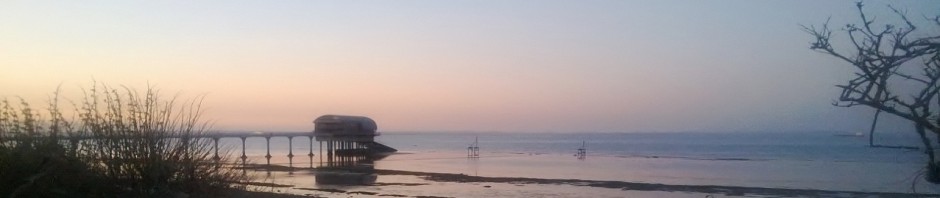
To arrive where I started…

Whatever the origin of religion, it is so often present in our lives as a way to try to understand the ineffable; a way to give presence and weight to an experience that defies words; that takes place outside of thought and perception. What are we to do with such an experience – a thing commonly known as mystical, or numinous? It cannot be thought, or described, since it is entirely beyond the realm of cognition and language.

This was my own experience; as a young man – even as a child – I had been prone to experiences like this, for which I had no words, nor even a broad category or discipline to which to assign them. (The nearest I got to the feeling was reading about astronomy or zoology or meteorology – a sense that here was something in terms of which everything else made sense, rather than my trying to make sense of it.)

It wasn’t until I spent an extended period in hospital in my teens that I had the freedom to begin to explore; to realise that the natural direction of this condition of mind was philosophical, even metaphysical; and I was in my early twenties before it became clear that it was something I learned to call “spirituality”. When I began to discover that I was not alone in this, of course my fellow pilgrims were in general religious people, and so it seemed to me that these must be religious experiences. Despite my having early on read Jiddu Krishnamurti and Lao Tzu, it was all too easy to understand these experiences in terms of either Buddhism, or later, irresistibly, the Christian mystical tradition – which of course brought the whole complex machinery of faith clattering along with it.

Extraordinarily, despite my by then growing and scarcely repressed doubts, it took the enforced isolation of the recent pandemic, and the discovery of writers like Sam Harris and Susan Blackmore, finally to shake me loose; to let me realise that, as Harris points out so poignantly in the first chapter of Waking Up, “Either the contemplative literature is a catalogue of religious delusion, psychopathology, and deliberate fraud, or people have been having liberating insights under the name of ‘spirituality’ and ‘mysticism’ for millennia… there are deeper insights to be had about the nature of our minds. Unfortunately, they have been discussed entirely in the context of religion and, therefore, have been shrouded in fallacy and superstition for all of human history.” Somehow, I had to recapitulate this for myself; it often amazes me to realise that it took me the best part of my adult life “to arrive where [I] started, and know the place for the first time.”

About time


Time present and time past
Are both perhaps present in time future
And time future contained in time past.
If all time is eternally present
All time is unredeemable.
What might have been is an abstraction
Remaining a perpetual possibility
Only in a world of speculation.
What might have been and what has been
Point to one end, which is always present.

TS Eliot, Burnt Norton

Real meditation isn’t something you do; it’s something you cease to do… it is the freedom to notice what is already here… What is there to notice, right now, that matters? What’s available to your powers of attention, in this moment, that is important – or even sacred? … Meditation is simply noticing what is real, as a matter of experience, now and always – but always, and only, now.

Sam Harris, from a recorded talk on Waking Up

“Self” is not a single thing in a thousand guises; it is a word for the thousand guises themselves. To understand the “self” is to understand the usage of the word within the full range of its seeming contradictory manifestations. Now it’s this, now it’s that. Only when we try to grasp an essence or assert the priority of one aspect of self-experience over another do we find ourselves entangled in philosophical brambles with very real emotional thorns. Wittgenstein repeatedly said that the job of philosophy is not to answer questions like these, but to dissolve them, to show that they are nothing but pseudo-problems thrown up by particular aspects of our language. In taking this approach to what had traditionally been seen as intractable metaphysical conundrums, Wittgenstein, I believe, comes the closest of any Western philosopher to Zen.

Barry Magid, Ending the Pursuit of Happiness: A Zen Guide

The thing about the self is that it is, as Wittgenstein pointed out, another substantive noun – like time – that can lead us to mistake the word for the substance. Time does not contain, or somehow lead to, the succession of experience: it is that successive experiencing. The self does not experience a succession of events: it is the experience. To sit still is to see this unfold, in real time.

The unfolding is the sacred moment itself. As Harris points out in his talk, it would be easy to be misled by what appears to be religious language here; but the sacredness of the moment resides not in some imported framework of belief that conditions, or interprets, or redeems the time. It is sacred because it is real. It is all that can be real – all else is a memory of time past, or an anticipation of time future; and these are only dreams. The world of speculation is empty, as empty as the idea of a self. The one end is only present; it is all that is real.

Happy New Year!

The perfect centre

Each morning invites you to be open and aware, as spacious as the sky that passes through you, recognizing “the precious nature of each day,” in the words of the Dalai Lama. No matter how frenzied you feel, no matter how shoved and strangled by the rush of events, you are standing in a single exquisite moment. No matter where you are, no matter how lost, you are standing at the perfect center of four directions. No matter how off-kilter you feel, you are standing in a place of perfectly balanced forces. Even if you feel abandoned by all that might comfort you, you are held in the embrace of what you cannot see.

Kathleen Dean Moore, Tricycle, July 2022

This is not quietism, not a call to abandon compassion and justice, but a necessary gift of grace, of rest and healing, in these days of fear and loss.

A long time ago now, Bob Dylan wrote, “Everything passes/Everything changes/Just do what you think you should do…” Impermanence is the only constant. No thing exists as itself alone: there is only becoming, and the dance of dependencies, each upon all else.. To rest as the open awareness in which all this arises is peace, and life, and the light that is the very source and ground of what is.

At the still point of the turning world. Neither flesh nor fleshless;
Neither from nor towards; at the still point, there the dance is,
But neither arrest nor movement. And do not call it fixity,
Where past and future are gathered. Neither movement from nor towards,
Neither ascent nor decline. Except for the point, the still point,
There would be no dance, and there is only the dance.

TS Eliot, Burnt Norton