Tag Archives: isness

Road songs

Since my teens I’ve loved the idea of the road song – music that you play to accompany driving, that somehow measures out the miles in bars and choruses, but is not (probably) about the travelling in itself.

I’ve been blogging on one platform or another since 2005; for four or five years before that I kept a website where I regularly published something like this kind of episodic writing. At one point, and I honestly can’t remember when, it occurred to me that all these bits of (mainly) prose were something like my own road songs, much more than considered accounts of anything. Consequently, they’re not autobiographical as such; they don’t tell a connected story, but are more in the nature of snatches of music heard in passing.

Lately I’ve been trying harder to be honest about some of the tentative conclusions I come across along the way, but I know that knowing is not as easy as that. AC Grayling:

One can believe a true proposition and have a justification for doing so, but the justification can be the wrong one for holding that belief. For example: suppose you believe that Fred is in the next room because you heard Fred’s favourite tune being strummed on Fred’s peculiar-sounding guitar. Fred is indeed in the next room, so your belief is true; but he has taught a friend to strum his favourite tune on his peculiar guitar, and it is the friend strumming. Your justification for holding this true belief is therefore not the right justification in the circumstances. So if you claim to know that Fred is in the next room on the basis of the evidence you employ to justify that claim, you cannot be said to know that Fred is there; you only or merely believe that he is. And very often, indeed, our beliefs are merely beliefs because the justification for them is insufficient to make that belief amount to knowledge.

Human consciousness is not – well, mine isn’t, anyway – so coherent a thing, or so independent of the objects of its perceptions, as to allow me to say, “This is what I think,” and have done with it. Susan Blackmore, in her luminous and heartwarming book Zen and the Art of Consciousness, writes:

At any time in a human brain there are multiple parallel processes going on, conjuring up perceptions, thoughts, opinions, sensations and volitions. None of these is either in or out of consciousness for there is no such place. Most of the time there is no observer: if consciousness is involved at all it is an attribution made later, on the basis of remembering events and assuming that someone must have been experiencing them in the past, when in fact no one was…

Even more interesting will be to understand the basis of those special moments in which one asks ‘Am I conscious now?’ or ‘Who am I?’ I suspect that these entail a massive integration of processes all over the brain and a corresponding sense of richer awareness. These probably occur only rarely in most people, but contribute disproportionately to our idea of ‘what it’s like to be me’. This kind of rich self-awareness may happen more of the time, and more continuously, for those who practise mindfulness. Does it completely disappear in those who transcend it?

To be still, not interfering – not even to ask Blackmore’s questions – allows something odd to happen, it seems to me. The “multiple parallel processes” appear to settle out, like sediment in a disturbed pond. Some sort of clarity supervenes: the layers of the mind rearrange themselves, perhaps, to continue with the metaphor, and the sense of a sequence, or progress, of events is replaced with something else, that is like the patterning of sunlight on the wavelets across the pond. Jiddu Krishnamurti:

When there is no illusion the “what is” is most sacred. Now let’s look at what actually is. At a given moment the “what is” may be fear, or utter despair, or a fleeting joy. These things are constantly changing. And also there is the observer who says, “These things all change around me, but I remain permanent”. Is that a fact, is that what really is? Is he not also changing, adding to and taking away from himself, modifying, adjusting himself, becoming or not becoming? So both the observer and the observed are constantly changing. What is is change. That is a fact. That is what is.

All that happens is that the stillness allows what is to appear, that’s all. The road disappears; the road songs go on changing, and yet somewhere there is something steady. Wieland Samolak:

When I was a teenager I used to sit on an empty field listening for hours to the sounds of distant cars, railroads, helicopters, and other motorized objects. These sounds, which are very rough and noisy when they are near, attracted me from the distance because they had merged and diffused into a continuum when they reached my ears. By this experience it came to my mind that it is more satisfying for me to listen to continuous changes within one sound than to the combinations of discrete sonic events usually found in music.

Just noticing what is – whatever appears in the field of consciousness, without having to label it or evaluate it, without having to either focus one’s attention on it or wrench one’s attention away from it – is perhaps the freshest, most peaceful thing one can do. There is no technique to adhere to, no doctrine to conform to: what is, is, and there’s nothing that needs to be done about it.
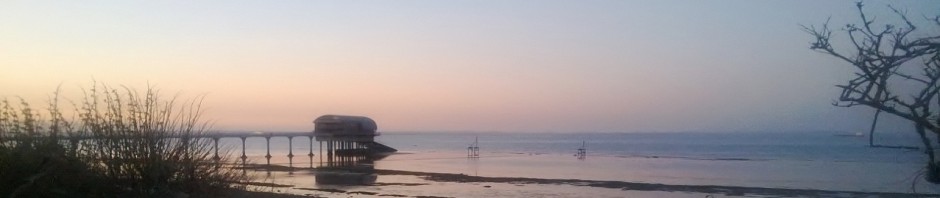
Just noticing…

Freedom is found in the choiceless awareness of our daily existence and activity…

You know, unless you hesitate, you can’t inquire. Inquiry means hesitating, finding out for yourself, discovering step by step; and when you do that, then you need not follow anybody, you need not ask for correction or for confirmation of your discovery.

Jiddu Krishnamurti

Sitting quietly – just noticing whatever appears in the field of consciousness, without having to label it or evaluate it, without having to either focus one’s attention on it or wrench one’s attention away from it – is perhaps the freshest, most peaceful thing one can do. There is no technique to adhere to, no doctrine to conform to: what is, is, and there’s nothing that needs to be done about it.

There is always a risk, of course, in talking like this. People who like things cut and dried are often suspicious of what appears to them to be an impractical vagueness; those from a background of religious orthodoxy will wonder if there’s a heresy lurking in there somewhere.

Robert C Solomon writes:

Spirituality is a human phenomenon. It is part and parcel of human existence, perhaps even of human nature. This is not to deny that some animals might have something like spiritual experiences. But spirituality requires not only feeling but thought, and thought requires concepts. Thus spirituality and intelligence go hand in hand. This is not to say that intelligent people are more spiritual, but neither is it to buy into a long tradition of equating spirituality with innocence misconstrued as ignorance or even as stupidity.

Spirituality for the Skeptic: the Thoughtful Love of Life

The practice of choiceless awareness (in Krishnamurti’s phrase) that I have been describing is not a kind of daydream, or an unusual state of consciousness even: it is a quiet but exceptionally alert quality of mind, without straining after attention either. Toni Bernhard suggests that,

[i]n this technique, we begin by paying attention to the sensation of the breath (this settles the mind and body), but then the instruction is to let our attention rest on whatever is most prominent in our field of awareness… awakening by engaging the whole of our experience fully, however it presents itself…  As a meditation practice, choiceless awareness is similar to the Zen meditation technique known as shikantaza, which roughly translates as just sitting. I love the idea of just sitting, although for me, just lying down will do—which takes me to my number one rule regarding meditation: be flexible.

Toni Bernhard, How to Wake Up

Earlier this year I wrote:

We are brought up, certainly here in the West, to see life as intrinsically bound up in progress, or at least development, and that isn’t necessarily so in the spiritual life, despite our continual use of terms like “path” and “practice”. We use them in the unspoken assumption that the path leads somewhere, that we are practising for a performance, or an examination. Even in religious contexts it is often seen as wasteful self-indulgence to sit still when we could be up and out feeding the poor or preaching the good news, or making some other kind of progress in our “walk of faith”. But maybe the point is being missed somewhere.

Contentment has become something of a dirty word, yet a life without it is too often at risk of shallowness and politicisation. Febrile activism and polemical discourse without contemplative roots are no more likely to bring peace to the human heart, or to the human community, than war. We need to sit still. We need those whose path has petered out under the quiet trees, whose practice is no more than an open and wondering heart. There was good sense in the Taoist tradition of the sage who, their public life over, left for a hut on a mountain somewhere. There are good things to be seen from a mountain hut.

This quality of stillness, of just noticing, is such a simple thing that it would be easy to dismiss it as inconsequential. It is not. It seems important, somehow – and here I hesitate, as Krishnamurti suggested – that someone is prepared to do this, and perhaps to ‘fess up to doing it on a regular basis. Maybe someone has to…

In the stillness

In the stillness of meditation, free from concepts, free from prejudices, we are able… to enter the experience directly. We are no longer trying to experience the experience, which is how most of us get so messed up. We get into something, then we start wanting to watch it, analyse it; we want to be in control of it; we want to be able to use it: to experience the experience. What we are learning in meditation, through the utterly simple practice of stillness and of letting go of all thoughts, is that we are able to enter into the experience of being as a whole person, and therefore, the experiences that happen don’t matter.

Laurence Freeman

It seems to me that contemplative practice, formal or otherwise, cannot be in any sense a goal-oriented activity. We are not seeking to achieve something, whether an experience or a state of mind; we are not going anywhere. All we are trying to do is to reveal to ourselves what is.

Language comes into this, of course. English is, at least when used for discursive prose, an irredeemably directional sort of a language. When we look for ways to speak of spiritual realities we seem either to slip into outright poetry – in which case we may convey a state of being but lose much of our ability to convey information; or we find ourselves adopting what Wittgenstein referred to as the “language game” of religion, of myth and liturgy. This, of course, is dangerous. (Even Sam Harris, in a book like Waking Up, begins by repudiating formal religion, but ends up adopting much of the language, and conceptual framework, of Buddhism.)

The alternative has to be in some way apophatic; not in the theological sense (since in denying predicates to God it ends up predicating his personal existence) but in the sense we began with, perhaps: we are seeking no thing at all. Or not even seeking: we find ourselves here. “Here” has been called ground, way, path, source, and perhaps it is all of these; but it is fact, plain and valid as a mathematical expression. It is what is, quite simply. The difficulty, if it is a difficulty, is in saying so without coming over as gnomic; but that may be a risk worth taking!

Part of a whole

In an excellent article on the Humanists UK website, Jeremy Rodell quotes Albert Einstein:

A human being is part of a whole, called by us the Universe – a part limited in time and space. He experiences himself, his thoughts and feelings, as separate from the rest – a kind of optical delusion of his consciousness. This delusion is a kind of prison for us, restricting us to our personal desires and to the affection for those nearest us…

There are moments when one feels free from one’s own identification with human limitations and inadequacies. At such moments one imagines that one stands on some spot of a small planet, gazing in amazement at the cold yet profoundly moving beauty of the eternal, the unfathomable; life and death flow into one, and there is neither evolution nor destiny, only being.

This comes very close to my own sense of the ground of being as not simply another name for a personified God, but (as Paul Tillich himself saw) the metaphysical source, Being itself, (forgive the capitalisation!) from which anything comes to be at all. Perhaps the closest expression I had found before I read Rodell’s article was the Tibetan Buddhist Dzogchen sense of the pristine awareness that is the fundamental ground itself.

Rodell goes on (ibid.):

Almost all humanists would agree that the scientific method is by far the best way to understand objective truths about the world, including brains. But subjective experience is not, by definition, open to direct observation by anyone other than the person experiencing it, though it is undeniably both ‘real’ to that person and, as far as we know, unique, as we can’t get into the minds of others other than through their descriptions, or their artistic expression.

This “experiential spirituality” (Rodell’s phrase) is the realm of contemplative practice, surely. Our practice is very simple, no more than a matter of being set free from the entanglements of discursive thought in order to find ourselves consciously resting in the “groundless ground” of all that is. This is our home, after all; we can never fall out of being, and if philosophers like Philip Goff and Annaka Harris are right (not to mention the Dzogchen teachers like Longchenpa) even consciousness itself is fundamental to coming-to-be. The part, in effect, is not other than the whole!

“All goes onward…”

All goes onward and outward, nothing collapses,
And to die is different from what any one supposed, and luckier.

Walt Whitman


Impermanence is the nature of every thing, and every thought. That we are transient and mortal, frail and temporary, is obvious to the least reflection. What we are is like the print of the wind on the sea, cats-paws on the bright surface of what is, here and gone before we know what we might be. And yet the water remains, shining.

To die is no more than that: the bright isness goes on, simply is. It is all there ever was, anyway, and nothing is lost. If we are the one who has not died, there is the grief, and loneliness; but the dead are not to be pitied. They are not, and what they were will always be, bright as the sea after the gust has passed. The clear ground lies open beneath the farthest stars.

Am I conscious now?

Susan Blackmore (Zen and the Art of Consciousness) asks the question, as a kind of koan, “Am I conscious now?”

It’s a good question. Am I? Have I been?

We must all be familiar with the sensation of listening to a favourite piece of music, and suddenly realising we’ve missed the best bit – the key change we love, the beginning of the bridge, whatever it is. We’ve been listening out for it, anticipating it, but when it comes our mind has wandered off into some fantasy, some memory, or a bird passing the window has caught our attention, and it is gone. Where? Were we aware of it?

Or we are meditating, paying attention to what is happening now, and we become aware (Blackmore uses this example herself, but I have had the identical experience many times) of a sound in the street outside. How long has it been going on? When we notice it, it has not just begun. And yet when we notice it, we are aware that we were aware of it already. It’s been going on for several seconds, quite distinctly, but we didn’t exactly notice. Now we do, and we remember, if that’s the right word, that it was happening already. Were we conscious then?

Here we are. For a moment, our whole attention is on now. Oh, the delicious freshness of it! We’re not remembering: we’re hearing it, feeling it, now! All that is, is now. There is nothing else. What else could there be?

Blackmore mentions Daniel Dennett’s objection to Cartesian dualism (which roughly states that there’s an I, sitting in here looking at a that, which is out there somewhere). But where is this I? There’s nowhere in the physical brain that could correspond to an I, no locus of consciousness, nor is there anywhere an incorporeal self (soul) could plug into the soggy assemblage of neurons between our ears. Dennett suggests rather that consciousness consists of “multiple drafts”. Blackmore writes (ibid.) “Dennett describes the self as a ‘benign user illusion’, and replaces the theatre with his theory of ‘multiple drafts’. According to this theory, the brain processes events in multiple ways, all in parallel and in different versions. None of the drafts is ‘in consciousness’ or ‘outside consciousness’; they appear so only when the system is probed in some way, such as by provoking a response or asking a question. Only then is one of the many drafts taken as what the person must have been conscious of. This is why he claims that ‘There are no fixed facts about the stream of consciousness independent of particular probes.’”

This makes more sense. Perhaps the light of attention picks out one or another draft, falls on one or another as the object of attention. But whose attention? Another draft’s attention? It’s all very puzzling.

But that moment. Now! That moment. There there is no sense of a shifting light of attention. There is only now. It has all come together in an instant, literally. This instant, now!

Perhaps we cannot know. Perhaps there is something here not susceptible of analysis. The bright instant is itself, represents no thing. It seems to rest in the ground of being directly, an isness that is only itself. Perhaps it is only light.