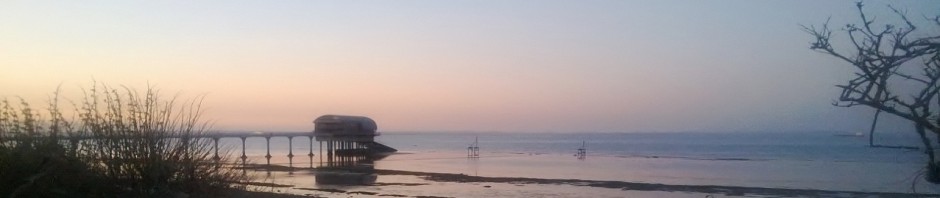
Again and again, I find liberation in the very places I thought it was not—in brokenness and imperfection, disappointment and disillusionment, limitation and death, failure and darkness, unresolvability and uncertainty, groundlessness and everything falling apart. This is “the freedom of the elbow not bending backwards,” as they say in Zen. Of course, the elbow can’t bend backwards without breaking. So this is not the freedom to do what I want, but the freedom to be as I am, and the freedom for everything to be as it is, which is no way and every way, and never the same way twice. This is the freedom of nothing to grasp…
For me, the never-ending, always Now, pathless path of awakening boils down to simply being awake, being present, being truly alive—seeing the beauty in everything, living in gratitude and devotion, enjoying the dance of life, being just this moment, not knowing what anything is, clinging to nothing, recognizing—not in the head, but in the heart—that everything belongs, that nothing persists, that every moment is fresh and new.
Joan Tollifson, Death: The End of Self-Improvement, pp.262,263
While human actions are completely determined, Spinoza introduces a notion of human freedom that is compatible with determinism:
- True Freedom is Understanding: Freedom isn’t the ability to choose against causes (free will), but the ability to understand the necessary causes that determine us.
- Activity vs. Passivity: A person is passive when they are determined by external causes and inadequate ideas (passions).
- A person becomes active and more free when they act from adequate ideas (reason) and understand that they are part of the necessary order of God/Nature. This intellectual understanding leads to the highest state: the intellectual love of God (Amor Dei Intellectualis).
(Google Gemini, response to user query, October 2025)
The flow of becoming, the stream, the Tao, is what it is. What comes to be in our frail and transient lives is only the result of causes far beyond our understanding, and leads on to effects we cannot know. What we can do is pay attention to the grace of the tiny, beautiful things among which we live: the endless sparkling of the wavelets of the stream.
Freedom is to know, all-of-a-piece, that what we are is nothing other than the stream itself, and that the stream runs in the course of what merely is: the ground itself. But how?
As Joan Tollisfson says, the path of awakening comes down to being awake: just that. The only way I know to be awake is practice; simply watching what happens, watching what becomes as it is becoming, is the only way. It is so simple, so perfectly simple; and yet it is the hardest work I’ve known. To be aware, without choosing an object, is the purest kind of attention; and yet it is like holding a bare wire.
Only sit still, in quiet. Don’t seek anything – watch. Live quietly, in obscurity, as Epicurus advised, and just watch. There is nothing else to do.
 An Open Ground