Tag Archives: death

Patterns in the stream

Is it not, then, a strange inconsistency and an unnatural paradox that “I” resists change in “me” and in the surrounding universe? For change is not merely a force of destruction. Every form is really a pattern of movement, and every living thing is like the river, which, if it did not flow out, would never have been able to flow in. Life and death are not two opposed forces; they are simply two ways of looking at the same force, for the movement of change is as much the builder as the destroyer. The human body lives because it is a complex of motions, of circulation, respiration, and digestion. To resist change, to try to cling to life, is therefore like holding your breath: if you persist you kill yourself.

Alan Watts, The Wisdom of Insecurity

We are, in fact, no thing – in the sense of a static object – at all. We are processes, except that that sounds too sterile, too conceptually fixed; we are swirls, eddies in what happens, in change itself. In that sense the idea of life and death makes no real sense of who or what we are, for we do not begin at birth, or end in death.

Where do I begin and end in space? I have relations to the sun and air which are just as vital parts of my existence as my heart. The movement in which I am a pattern or convolution began incalculable ages before the (conventionally isolated) event called birth, and will continue long after the event called death. Only words and conventions can isolate us from the entirely undefinable something which is everything.

Watts, ibid.

In fact the idea of a fixed and static I (or me, come to that) is entirely an illusion in any case. It is more like a function of memory than an identity. Watts again (ibid.):

In thinking of ourselves as divided into “I” and “me,” we easily forget that consciousness also lives because it is moving. It is as much a part and product of the stream of change as the body and the whole natural world. If you look at it carefully, you will see that consciousness—the thing you call “I”—is really a stream of experiences, of sensations, thoughts, and feelings in constant motion. But because these experiences include memories, we have the impression that “I” is something solid and still, like a tablet upon which life is writing a record.

Yet the “tablet” moves with the writing finger as the river flows along with the ripples, so that memory is like a record written on water—a record, not of graven characters, but of waves stirred into motion by other waves which are called sensations and facts. The difference between “I” and “me” is largely an illusion of memory. In truth, “I” is of the same nature as “me.” It is part of our whole being, just as the head is part of the body. But if this is not realized, “I” and “me,” the head and the body, will feel at odds with each other. “I,” not understanding that it too is part of the stream of change, will try to make sense of the world and experience by attempting to fix it.

It is to this paradox that the whole project of the contemplative life is addressed. To understand the “self” not as a thing but as a pattern in the flow of change is not something that is accessible to the thinking mind; and the only thing to do with the thinking mind is to bring it to an end of itself in practice. Just sitting is the most pointless endeavour: that is the whole point of it. In that stillness, the fractured self (I/me) can begin to heal, and the lovely, fleeting swirl can reveal itself as just the movement of the stream it always was.

In the end…

This morning the light in my room was particularly crystalline. The autumn sunlight crossed the floor, bringing with it the silvery blue of the open sky above the trees. Somewhere in that blue brightness an airliner passed high overhead, the muted rumble of its engines just on the edge of hearing.

There was a time, when I was briefly close to death, that a kind of blessed completeness replaced all normal perceptions, and I knew that my life, full as it was of things undone, loose ends, plans unfulfilled, goodbyes unsaid, could be laid down just as it was, and it would be all right. Not merely okay, but right – as it should be. The way would hold all that had been, and this life that had been mine would be completed, perfectly. There was nothing whatever wrong; it was all safer than I could have ever imagined.

This morning, very gently but suddenly, in the midst of practice, I knew this to be true not just in the immediate presence of death. This sense returned in open awareness, complete and sure, that everything – everything – is safe in the end, in the way, in the ground itself. There is truly nothing whatever to worry about. Not even death. Especially not death.

Eternal life?

In Three Steps to Awakening: A Practice for Bringing Mindfulness to Life, Larry Rosenberg ends his chapter on choiceless awareness with a Q&A session. One of the questioners asks:

Q: Ideas and beliefs about rebirth are often mentioned in dharma books. I wonder if you could tell us whether you believe in rebirth.

A: If you are a person brought up in a culture that has believed in rebirth for thousands of years, such as in Tibet or Thailand, the answer is obvious. I’ve known wonderful Tibetan teachers who look at me with sympathy when I say I’m uncertain about rebirth. On the other hand, many professors in the sciences might look at you like you’re crazy if you even mention the subject. All I know is that I am open to the idea but honestly don’t know!

One of the reasons I no longer profess to be a Christian, and could never be a Buddhist in any formal sense, is just this question.

In Christian doctrine God is held to be eternal – though opinions vary as to whether this implies that he exists outside time altogether, or whether he exists simultaneously in all dimensions of time, past, present and future. To die as a Christian is to possess eternal life (John 10:27-28) through knowing God (John 17:3). The only way I could ever make sense of this was to think that the instant of death must somehow be atemporal, and that in that moment outside time one might meet God. I have never been able to make any sense of the idea of a portable plug-in soul that could somehow be translated to a land beyond the sky. Maybe I never was a “proper” Christian.

Similarly, any idea of rebirth runs into the same problem, only worse. Not only is there the question of what might constitute the soul to be reborn, and where it might be located, but Buddhism explicitly, and cogently, states that there is, in a living person, no permanent unchanging self or essence (anātman). So what is to be reborn?

The metaphysical mechanics of life after death don’t make any sense to me, however they are expressed. That there is life after death – that the human race will go on, and so will all the other forms of life – is undeniable; but my life after my death? I’m not sure that idea even makes sense.

Cause and effect is another matter, maybe. Things have consequences; they are themselves always consequences. There is no discernible beginning or end to this chain of causation (karma), short of cosmological speculations about the “beginnings” of time. I was born as a result of certain events in history – my mother and father met; they met because of their work during WWII; there was a war because of certain political, economic and military factors, and so on and so on, back into time – and there will be certain limited consequences of events in my own life that will outlive me. But this is not the same as me in some way continuing, or recurring into the future.

But things exist. They are. There is a ground of being – Istigkeit, Tao – from which, in which, all things arise.

The way that can be spoken of
Is not the constant way;
The name that can be named
Is not the constant name.
The nameless was the beginning of heaven and earth;
The named was the mother of the myriad creatures.

Tao Te Ching

Things go on. Where they come from, where they go – I’m not sure those are questions that mean anything in the context of being itself; hence the “nameless” in the Tao Te Ching.

All we can do, all we need to do, is sit still. Daishin Morgan:

A theme I return to again and again is to just do the work that comes to you. Such an attitude is open-ended in the way that life itself is open. If you give yourself to the way, the way appears and that way is always changing.

Into the light

Dr. Welton assigned me to the newest body, where dissection had just begun, and specifically to the left hand. He wanted tendons and ligaments exposed. Day after day, I took my tools and sat alone beside the table and carefully opened the hand, following diagrams in a thick book. I did a good job. I gradually came to understand that hand, and all hands, in a way that remains with me now. But I came to understand something else as well. One day, I had almost finished exposing the tendons. I found that by pulling on them gently, I could move the fingers one by one. I had never been uneasy in that room, but that day I looked up the length of the body, naked except for the covered face, and all at once I was covered in goose bumps.

Dissection is more a psychological experience than an intellectual one for many people. I found it to be both. I remember more about how it felt to be with the dead, to touch and open a body, to see what happens to bodies, than any details about the insertion of the latissimus dorsi muscle. (I learned that, too, in a way I could never have learned from books.) Working with cadavers makes it clear what death is. A subject becomes an object. A person becomes a body. And, miraculously, turns back: this body, this firm, immobile object, is, was, a person, a warm, breathing person. A body is not an ordinary object—can never be an ordinary object. This particular object had once been awake.

With a jolt, I realized that what I was cutting apart had been a living hand, just like mine; that it had been pliant and animated. It had held a pen, shoveled dirt, bathed a child, stroked someone’s hair. That it was like my precious hands, which until that moment had simply been part of me. Alive. I realized, This man is like me. I already knew that this body was like my body; I could label its parts. But suddenly I knew that this man was like me. And that I would be like this man.

Sallie Tisdale, Advice for the Dying (and Those Who Love Them): A Practical Perspective on Death

Sallie Tisdale’s recollection of her Anatomy and Physiology course is one of those passages that is especially precious to me. I cannot quite remember – it was long before my formal split from Christian faith and practice – precisely when it was I realised for myself, with perfect immediacy, that I was my body; my body was me, and one would not survive the other. It was sometime during the period when I was very ill with coronary heart disease, certainly, and, with the utter sense of reality that seems to characterise such times, I saw that death was no more than a dissolution into light – the safest, most natural consummation imaginable. (This was no intellectual exercise, but a vivid, real experience more certain than life itself.)

Throughout Buddhist literature in particular there are many intimations of this “clear light”, most notably I think in Dzogchen, where it is an attribute of the Ground (gdod ma’i gzhi). (I have long felt that Tillich’s phrase “the ground of being” was perhaps closer to expressing the irreducible Istigkeit than anything else I’ve read.) The ground of being is there, and only there, when we come to an end of ourselves. It lies far beyond all we know as self, or other – though it can appear to us so utterly other that we are tempted to hide from it – and yet the way to it is inward, into the extreme depths of what we are.  The ground of being is no thing: it precedes thingness.

The ground is the end, that to which all things return. Kathleen Dowling Singh:

[Death] is the experience of ‘no exit,’ a recognition of the fact that the situation is inescapable, that one is utterly at the mercy of the power of the Ground of Being… Love is the natural condition of our being, revealed when all else is relinquished, when one has already moved into transpersonal levels of identification and awareness. Love is simply an open state with no boundaries and, as such, is a most inclusive level of consciousness. Love is a quality of the Ground of Being itself. In this regard and at this juncture in the dying process, love can be seen as the final element of life-in-form and the gateway to the formless.

Of course one cannot practice for death, at least not intentionally. But one can practice with death in mind. To sit in the bright stillness of shikantaza is no more than that.

That everything is included within your mind is the essence of mind… Even though waves arise, the essence of your mind is pure; it is just like clear water with a few waves. Actually water always has waves. Waves are the practice of the water. To speak of waves apart from water or water apart from waves is a delusion. Water and waves are one. Big mind and small mind are one. When you understand your mind in this way, you have some security in your feeling. As your mind does not expect anything from outside, it is always filled. A mind with waves in it is not a disturbed mind, but actually an amplified one. Whatever you experience is an expression of big mind…

Before we were born we had no feeling; we were one with the universe. This is called “mind-only,” or “essence of mind,” or “big mind.” After we are separated by birth from this oneness, as the water falling from the waterfall is separated by the wind and rocks, then we have feeling. You have difficulty because you have feeling. You attach to the feeling you have without knowing just how this kind of feeling is created. When you do not realize that you are one with the river, or one with the universe, you have fear. Whether it is separated into drops or not, water is water. Our life and death are the same thing. When we realize this fact we have no fear of death anymore, and we have no actual difficulty in our life.

When the water returns to its original oneness with the river, it no longer has any individual feeling to it; it resumes its own nature, and finds composure. How very glad the water must be to come back to the original river! If this is so, what feeling will we have when we die? I think we are like the water in the dipper.

Shunryu Suzuki, Zen Mind, Beginner’s Mind

Atheism and consciousness

What is consciousness? This may sound like a simple question but it is not. Consciousness is at once the most obvious and the most difficult thing we can investigate. We seem either to have to use consciousness to investigate itself, which is a slightly weird idea, or to have to extricate ourselves from the very thing we want to study. No wonder philosophers have struggled for millennia with the concept; and for long periods scientists refused even to study it. The good news is that, in the 21st century, ‘consciousness studies’ is thriving. Psychology, biology, and neuroscience have reached the point where they are ready to confront some tricky questions: What does consciousness do? Could we have evolved without it? Is consciousness an illusion? What do we mean by consciousness, anyway?

This does not mean that the mystery has gone away. Indeed, it is as deep as ever. The difference now is that we know enough about the brain to confront the problem head on. How on earth can the electrical firing of millions of tiny brain cells produce this—my private, subjective, conscious experience?

(Susan Blackmore, Consciousness: A Very Short Introduction)

In the philosophy of mind, mind–body dualism denotes either the view that mental phenomena are non-physical, or that the mind and body are distinct and separable. Thus, it encompasses a set of views about the relationship between mind and matter, as well as between subject and object, and is contrasted with other positions, such as physicalism and enactivism, in the mind–body problem.

(Wikipedia)

Confronted with the luminous intricacies of being human, it is easy to see why dualism is so attractive to us. It not only allows us to ignore the issue of how brains might produce consciousness – in this view they don’t, not directly at least – but a separate, detachable, immaterial self can transcend a finite human life span, go off on out-of-body adventures, communicate mind-to-mind, and all manner of other handy things. But what could it be, this supernatural plug-in person? Of what could it be constituted, and by whom or what? How could the data connection function between it and the physical brain? These questions are at least as hard as trying to understand how that brain might give rise to subjective experience – much harder perhaps, it seems to me.

We know from tragic cases of brain injury, disease, and surgical intervention just how profoundly consciousness, and the sense of self, are affected by gross changes to the physical structure of the brain (Blackmore,  ibid., pp. 25ff.). It seems obvious to me then, as a layman, that my own subjectivity is, after all, a result – however subtle – of electrochemical processes within my own nervous system, and that when those processes cease, as they will when I die, so that subjectivity will cease also.

But this is not a crude oversimplification, nor a bad thing in itself. It is just how things are, to the best of our understanding. The human brain is a structure of mind-boggling intricacy (it is estimated that there are around 86 billion neurons in the average brain, each neuron of which connects to about 1,000 others). It seems to me entirely feasible that the human personality and consciousness could arise from such vast computing power. But how this comes about remains, still, the mystery.

I take it to be axiomatic, therefore, that our notions of meaning, morality, and value presuppose the actuality of consciousness (or its loss) somewhere. If anyone has a conception of meaning, morality, and value that has nothing to do with the experience of conscious beings, in this world or in a world to come, I have yet to hear of it. And it would seem that such a conception of value could hold no interest for anyone, by definition, because it would be guaranteed to be outside the experience of every conscious being, now and in the future.

The fact that the universe is illuminated where you stand—that your thoughts and moods and sensations have a qualitative character in this moment—is a mystery, exceeded only by the mystery that there should be something rather than nothing in the first place. Although science may ultimately show us how to truly maximize human well-being, it may still fail to dispel the fundamental mystery of our being itself. That doesn’t leave much scope for conventional religious beliefs, but it does offer a deep foundation for a contemplative life. Many truths about ourselves will be discovered in consciousness directly or not discovered at all.

(Sam Harris, Waking Up: Searching for Spirituality Without Religion)

This is one of the things that contemplative practice so clearly demonstrates: all that we know, or feel, or perceive, takes place in consciousness. In choiceless awareness all things can be seen directly to arise in consciousness: the rising and falling of my chest, the warm cooing of the wood pigeons in the trees behind the garden, an idea for a blog post, the grumble of a bus leaving the stop outside the gate, the ache in my knee. All these and more appear in consciousness – where else could they appear? – and my only connection with them is in that appearing. Even the ones that affect me directly, like the breeze through the open window, that is beginning to cool as evening comes on, I only know about as their effects on me – my cooling skin – appear in my awareness.

To remain still, not seeking or holding, within the bright field of awareness, the isness of all that arises in my mind is not other than the isness of things in themselves: the open ground in which things arise, and pass.
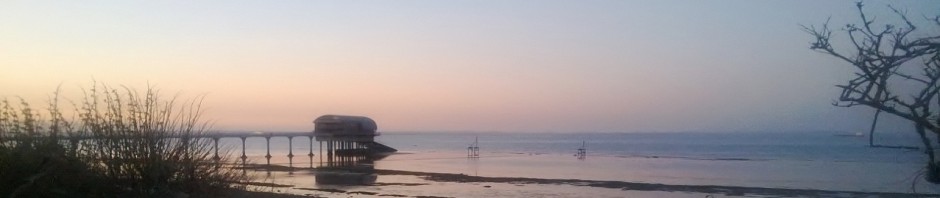
“All goes onward…”

All goes onward and outward, nothing collapses,
And to die is different from what any one supposed, and luckier.

Walt Whitman


Impermanence is the nature of every thing, and every thought. That we are transient and mortal, frail and temporary, is obvious to the least reflection. What we are is like the print of the wind on the sea, cats-paws on the bright surface of what is, here and gone before we know what we might be. And yet the water remains, shining.

To die is no more than that: the bright isness goes on, simply is. It is all there ever was, anyway, and nothing is lost. If we are the one who has not died, there is the grief, and loneliness; but the dead are not to be pitied. They are not, and what they were will always be, bright as the sea after the gust has passed. The clear ground lies open beneath the farthest stars.

Onyng

If the ground of being is no thing, literally not an object – as it must be, being the source and beginning of all that comes to be – then in our closeness to it we find we cannot speak of it, really. JP Williams writes: “Aside from the fact that the Creator of all cannot be any kind of ‘object’, the divine activity of ‘onyng’ [Julian of Norwich] finally removes the ground from under any duality. The soul’s ‘solitude’ is not necessarily a denial of divine presence; when it is united with God, there are not two beings to count. Peace and holiness are ‘held at no remove’, as John [of the Cross] says. In so far as the soul speaks at all there, it stammers, tripping itself up, disrupting its own saying.”

In the ground itself there is no separation, no “God” and “soul”; there is only being. There is no “life” and “death”, as if these were separated, states or places to transition between; there is only isness, beyond time or ending. What we think of as self (which is only a convenient fiction, anyway) is entirely subsumed in light. It is nothing: it has found no thing.

Groundswell

I use the phrase “The Ground of Being” – though I don’t normally capitalise it – often on this blog. It is usually credited to Paul Tillich, who used it in his Systematic Theology to refer to God as being-itself, though I doubt if he was its originator. The concept itself has been around for centuries, in Christian mysticism, in the Buddhist Dzogchen tradition, in the ancient Chinese philosophy of the Tao…

The ground of being is there, and only there, when we come to an end of ourselves. It lies far beyond all we know as self, or other – though it can appear to us so utterly other that we are tempted to hide from it – and yet the way to it is inward, into the extreme depths of what we are. In Cynthia Bourgeault’s words, “it is the spring at the bottom of the well of our being through which hope is continually renewed.”

Ontologically, the ground of being is the source of all that is; in Paul’s words, “He [Christ] is before all things, and in him all things hold together.” (Colossians 1:17 NIV) It is hard to get away from what would appear to be religious language here, though it is as approximate and metaphorical as any other. Matthew Fox writes, “Divinity is found in the depth of things, the foundation of things, the profundity of things. We all have a depth, a ground, a presence and there, says Eckhart, lies divinity, for ‘God’s ground is my ground and my ground is God’s ground.'”

Yet the ground of being is no thing: it precedes thingness. One can’t really use it, in any meaningful sense, as the object of a sentence, and yet it keeps us wanting to use it as a verb, which is perhaps the reason why the writer known as John opened his gospel, “In the beginning was the Word, and the Word was with God, and the Word was God.” (John 1:1 NIV)

It seems that actually to encounter the ground is way beyond our pay grade. All we can do is to be willing to be encountered by it (though to be without it would be to be without existence at all). Cynthia Bourgeault has a quote for us:

Bede Griffiths, one of the great contemplative masters of our time, claimed that there are actually three routes to the center. You can have a near-death experience. You can fall desperately in love. Or you can begin a practice of meditation. Of the three, he said with a somewhat mischievous smile, meditation is probably the most reliable starting point.

Cynthia Bourgeault, Mystical Hope

The ground is the end, that to which all things return. Kathleen Dowling Singh wrote, “[Death] is the experience of ‘no exit,’ a recognition of the fact that the situation is inescapable, that one is utterly at the mercy of the power of the Ground of Being…” It is the safest place, out of which one cannot fall: it might even be called Love. In Dowling Singh’s words, again, “Love is the natural condition of our being, revealed when all else is relinquished, when one has already moved into transpersonal levels of identification and awareness. Love is simply an open state with no boundaries and, as such, is a most inclusive level of consciousness. Love is a quality of the Ground of Being itself. In this regard and at this juncture in the dying process, love can be seen as the final element of life-in-form and the gateway to the formless.”


No thing at all

Over the last few months I have written little. If I am honest, I should have to say that this has not been because I have had nothing to say, so much as that I had run out of words.

Over the long years of my Christian contemplative practice – from the age of thirty, maybe – I was able to draw on the deep well of Christian iconography, theology, the Bible itself, for words and images to tell myself about the journey I was on; words which I could readily share. Since then it has been more difficult, much more difficult. I am not a Buddhist. Despite my great respect for Buddhism’s 2,500 years of spiritual and psychological research and development, and my love for many Buddhist writers classical and contemporary, their words do not on the whole “do it for me” in the way that the Christian tradition so often has.

Nonetheless, despite a couple of abortive attempts to return to formal, organised religion, and despite nearly a year of trying to live out a kind of “churchless Christianity”, I could not with any intellectual honesty understand myself as a member of a Christian church any longer. The faith that is indistinguishable from community, from the gathered people (ekklēsia) that is the church, simply no longer functioned as a descriptor for where I found myself.

Increasingly, despite (or because of) my subsequent unwavering practice of broadly vipassana-based meditation, or a version of centering prayer, I felt lost, my heart clogged with the dust of broken words, dry and hollowed out. I had no idea who I was any more.

It came to the point where all I could do was cry out (to whom?) in the cold hours before dawn, that I was lost, so lost. No maps I knew showed this desert place, wherever it was, and besides, my compass no longer worked. In this condition, tired out, I fell asleep.

When I awoke, light poured through the window across the bed. I was light myself, empty and crystal clear. No, I was not. I, was not; except that there was a gossamer memory that knew itself as me, someone who had, effectively, died in the night. “All there is is oneness. The unknown. No-thing appearing as it appears. It is already whole. It is already complete. That which seems to be missing – wholeness – is not lost.” (Andreas Müller)

That phrase, no thing, was all that was left of language that morning. (It is a phrase that has been with me, resonant and entirely resistant to explanation, for many years.) I cannot possibly describe the freedom, the irresistible joy that was left where I had been.

Since, the joy and the freedom have not dimmed. The gossamer memory of me still seems to function perfectly well as a way to get around in the phenomenal world, but it is no longer convincing. It is as transparent as glass. I so love all that is, even if it is no thing. Especially as it is no thing.

What happened? I don’t know. Of course I don’t. What happened is not the kind of thing “I” could know. This seems like a clever answer, a smarty-pants way to get one up on my readers, and that’s not what I’m trying to do. I can say, though, that it is not “something” that “I” achieved. Müller again: “What remains is indescribable. It is indescribable simply because there is no one left who can describe it. There is no one left who experiences oneness (which, by the way, would then not be oneness anymore) and could possibly know how that is. Yes, there is no one left who knows how it is. That is freedom.”

So is this the fruit of meditation? The culmination of some kind of a process? Obviously not. And yet. Could it have happened without a couple of years’ steady practice of meditation, following nearly forty of Christian contemplation? Yes, obviously. People like Eckhart Tolle and Ramana Maharshi each had their illumination following moments of great stress or despair, not unlike, according to their own descriptions, the desert place where I had found myself that night. They do not seem to have spent long years meditating in preparation. Ramana hadn’t had time, anyway; he was only sixteen.

But perhaps, for me at least, practice made a place where it was possible. It just happened, that much is clear. For me, it seems to have happened while I was dreamlessly asleep. But maybe practice functioned like cultivating a field. Cultivation doesn’t make anything grow – you need seeds, and water, and warmth for that – but it does make a place where seeds can safely germinate. I don’t know. Something had to get me out there into that desert – something had to shear away the props that upheld the idea of a me who could get somewhere, even into a desert.

There is certainly nothing I could have done to force such a thing to happen (and from the point of view of “I” that would have felt not unlike some sort of suicide) and it doesn’t happen to or for “me” anyhow. It happens. What is beyond is no thing at all.

It is home

A couple of weeks ago I wrote quite a long blog post on the subject of trust. As time goes on I am increasingly sure that what I said there is true:

Trust is fundamental to being human. Perhaps in fact it is fundamental to being alive, in whatever form of being we may find ourselves. It is a value that transcends culture, transcends opinion, transcends our reactions to our circumstances – even ones that strike at our very existential security, and, in their threat to future generations, strike at our evolutionary sense of purpose as inhabitants of Earth.

There is a trust that rests on a far deeper foundation that our frail lives. Each of us will die: that is the one thing of which we may be utterly certain. But our death, like our life, rests in the ground of being from which we cannot fall.

This short guided meditation from Jack Kornfield’s 2008 book The Wise Heart brings us to the heart of what practice is. The road to the encounter with our own true nature is long, and for some of us tortuous, but it is the road home:

Sit comfortably and at ease. Close your eyes. Let your body be at rest and your breathing be natural. Begin to listen to the play of sounds around you. Notice those that are loud or soft, far and near. Notice how sounds arise and vanish on their own, leaving no trace. After you have listened for a few minutes, let yourself sense, feel, or imagine that your mind is not limited to your head. Sense that your mind is expanding to be open like the sky—clear, vast like space. Feel that your mind extends outward beyond the most distant sounds. Imagine there are no boundaries to your mind, no inside or outside. Let the awareness of your mind extend in every direction like the open sky.

Relax in this openness and just listen. Now every sound you hear—people, cars, wind, soft sounds—will arise and pass away like a cloud in the open space of your own mind. Let the sounds come and go, whether loud or soft, far or near, let them be clouds in the vast sky of your own awareness, appearing and disappearing without resistance. As you rest in this open awareness for a time, notice how thoughts and feelings also arise and vanish like sounds in the open space of mind. Let the thoughts and feelings come and go without struggle or resistance. Pleasant and unpleasant thoughts, pictures, words, joys, and sorrows—let them all come and go like clouds in the clear sky of mind. Then, in this spacious awareness also notice how you experience the body. The mind is not in the body. The body sensations float and change in the open sky of mind. The breath breathes itself; it moves like a breeze. If you observe carefully, the body is not solid. It reveals itself as areas of hardness and softness, pressure and tingling, warm and cool sensation, all floating in the space of awareness.

Relax. Rest in this openness. Let sensations float and change. Allow thoughts and images, feelings and sounds to come and go like clouds in the clear, open space of awareness. As you do, pay attention to the consciousness itself. Notice how the open space of awareness is clear, transparent, timeless, and without conflict—allowing for all things but not limited by them. This is your own true nature. Rest in it. Trust it. It is home.

Jack Kornfield, The Wise Heart: Buddhist Psychology for the West