Tag Archives: Tara Brach

Vastness

…[W]hen we look within, there is no entity, no mind-substance, no self, no thing we can identify. There is just awareness—open empty awareness. We can’t locate any center, nor can we find an edge to our experience. Unless we anchor ourselves again in thoughts, or grasp after desired sensations or feelings, we have nowhere to stand, no firm ground. This can be disconcerting, scary, incredibly mysterious. While there may be a profusion of activity—sounds, sensations, images—there is no thing to hold on to, no self behind the curtain managing things. This seeing of no thing is what the Tibetan teachers call “the supreme seeing.” 

But this emptiness, this “no-thingness,” is not empty of life. Rather, empty awareness is full with presence, alive with knowing. The very nature of awareness is cognizance, a continuous knowing of the stream of experience…

We look back into the emptiness that is the creative source of all stories and emotions, into the formless fertile space that gives rise to all of existence. There, we “see the universe as it is.”…

With practice, recognizing our natural awareness takes less and less of an effort or sense of doing. Rather than climbing up a hill to get a view, we are learning the art of relaxing back and wakefully inhabiting the whole vista. We look back into awareness and then simply let go into what is seen. We become more at home in awareness than in any story of a self who is falling short or on our way somewhere else. We are at home because we have seen and experienced firsthand the vast and shining presence that is the very source of our being.

Tara Brach, Radical Acceptance, pp.315-317

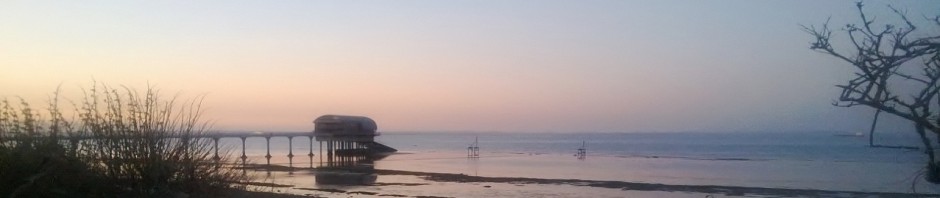
Vastness is an experience, if that is the right word, that most of us only encounter looking up at the night sky on a clear night, or perhaps gazing out across the ocean when the sea is glassy calm, and seems to extend beyond the rim of the world. But there is an interior vastness that opens directly on the ground of being itself, no-thing, the endless expanse before differentiation, before “thingness” ever was.

Silence itself leads us in the end to what merely is. Only in inward silence can we see out across the shore of our own unquiet sea. If we will only sit still and be quiet, the peaks and troughs of our fears and our longings will settle out; and then, perhaps, the way will open across the water. But we must wait, we must be still and want nothing. Only when we are at an end of ourselves can we receive the grace that comes in silence, in the stillness that lies behind our breath, behind the little sounds from beyond the window, behind our having been born. For it is grace. All we can achieve is the letting go, nothing more. The best we can  do is to get out of our own way, for the fundamental ground is always there, patient, immeasurable, without beginning. We have only to trust, to let go without assurance, drop ourselves, into the empty stillness that is always waiting for us, always there.

[First published 18/11/2025]

Being still

To remain still is one of the fundamental conditions of contemplative practice, and yet it is also one of its fruits. Many of us will remember how hard it was to stay still as children, even –  maybe especially – when we were explicitly told to. And yet I found that when I as a child had no choice but to remain still, the effect of that simple action – or lack of action – had effects that remain with me to this day.

Before I turned five, I contracted meningitis, and spent what would have been my first year of school slowly recovering. I spent some of the most peaceful and untroubled hours of my life lying on a rug by the old apple trees in the orchard at the back of our house, under the endless vault of the open sky, listening to distant aircraft passing high overhead, or on a flaking stone bench on the patio, watching the little velvety red mites scampering in the sunlight. Time was unlike anything I’d known before, an open ground of appearing, empty of thought but fertile with becoming.

Mathieu Ricard writes (The Art of Meditation, p.93):

According to Buddhist analysis, the world is a result of the coming together of an infinite number of causes and conditions that are continually changing. Just as a rainbow is formed at the precise moment the sun shines on a collection of raindrops and disappears as soon as the factors that produce it are no longer present, phenomena exist in an essentially interdependent mode and have no independent and permanent existence. Ultimate reality is therefore described as empty of independently existing animate or inanimate phenomena. Everything is relationship; nothing exists in and of itself. Once this essential idea has been understood and assimilated, our erroneous perception of our ego and our world gives way to an accurate view of the nature of things and beings – wisdom. Wisdom is not a simple intellectual construction or a compilation of information. It arises from a precise methodology that allows us progressively to eliminate mental blindness and the afflictive emotions that derive from it and, in that way, free us from the principal cause of suffering.

So long as we act in the world from our own will and desire, our own imagined, illusory sense of what is real, the emptiness of forms (“independently existing animate or inanimate phenomena”) will be invisible to us. It is only when we keep still enough that the fragility and contingency of all that appears to be will become clear, like the settling out of sediment in a pond that has been disturbed but is now at rest.

It seems to me that, short of illness or some other unsought but somehow accepted immobility, stillness can only be found in some kind of practice; as far as I am concerned, the simpler the better. Choiceless awareness – just sitting, shikantaza – or the steady releasement of Gelassenheit, are the ways that open themselves to me; gateways into silence and stillness so plain and simple that anyone can use them, regardless of skill or training. All that is needed is regularity and time – faithfulness, if you will – given to the simplest practice, for the “vast and shining presence that is the very source of our being” (Tara Brach) to open around us.

A vast and shining presence

Silence and stillness sometimes seem as though they are, or should be, the same thing – but, as Leigh Anderson of the Spiritual Naturalist Society points out, this is not quite so in the contemplative life:

Silence in meditation transcends the mere absence of external sound. It represents an internal quietude, an expansive space where the mind’s constant chatter diminishes to mere whispers. This pursuit of silence is, in essence, a battle against our intrinsic human nature — a nature that fills every moment of potential stillness with relentless thought. The path to internal silence is fraught with challenges, as our minds are wired to think, analyze, and incessantly chatter. Yet, the rewards of cultivating this form of silence are profound, offering mental clarity, emotional equilibrium, and a profound connection to the present moment that feels deeply rooted and unshakable.

On the flip side of the meditative coin lies stillness — not merely the absence of physical motion but a deep mental repose where inner agitation dissolves. Within the realm of stillness, we discover the ability to observe our thoughts and emotions without judgment, to exist in the present moment without the compulsion to act. This stillness isn’t merely an end goal but a gateway; it opens us up to deeper introspection, fostering an environment where heightened awareness and profound insights can flourish.

In Quaker usage, silence – the context of meeting for worship – is always acknowledged to be more, and often other, than an absence of words. Birdsong, the traffic outside, Friends shifting slightly in their seats, breathing, voices in the street – these are all drawn into the silence of meeting, and become part of its fabric; and so it is in one’s own solitary practice. Extraneous sounds are not interruptions; they are an integral element in the silence itself.

Stillness, though, is an inevitably inward place. Ultimately, it is not other than objectless awareness, the second part of Martin Heidegger’s definition of Gelassenheit: “an openness to mystery”.

I was standing at a busy crossroads waiting for lights to change. Traffic was racing by, people buzzing back and forth; noise and fumes, action, restlessness, rush, impatience, thoughts, demands. Suddenly and unexpectedly, I felt my whole existence pause. I looked to see whether the green man was showing yet, followed by the pressurizing countdown of seconds allowed to cross the junction, people crossing over each other. But I felt strangely calm and quiet. I felt “otherness” deep within, a stillness, and my whole life shifted into the present.

Joanna Godfrey Wood, In Search of Stillness, p.13

Within stillness, all that obscures awareness seems to settle out, like the sediment in a disturbed pond when it is left in peace again. Just as the small sounds within and without a Quaker meeting house do not interrupt the silence but become woven into it, so passing thoughts and images, and physical sensations, merely become part of the nature of stillness itself. Tara Brach:

With practice, recognizing our natural awareness takes less and less of an effort or sense of doing. Rather than climbing up a hill to get a view, we are learning the art of relaxing back and wakefully inhabiting the whole vista. We look back into awareness and then simply let go into what is seen. We become more at home in awareness than in any story of a self who is falling short or on our way somewhere else. We are at home because we have seen and experienced firsthand the vast and shining presence that is the very source of our being.

Radical Acceptance, p.317

Release

One of the English translations often offered for the German philosophical term Gelassenheit is “releasement”. Martin Heidegger seems to have used Gelassenheit to indicate both a “releasement to” and “releasement from”: in contemplation we are released from our need to classify and arrange our experience, but we are released to the mystery, the wordless isness beneath all that comes to be.

“It is in meditative contemplation that we are open to Being, and in the steadfastness of being open, are exposed to it (i.e., Being). What reveals Being, is therefore, as Heidegger would say, an ‘in-dwelling’ in Being itself.” (Viktorija Lipič, An exploration of Gelassenheit through Meister Eckhart and Martin Heidegger) This seems to me remarkably close to the Dzogchen concept of Rigpabeyond attributes, the clear and undisturbed awareness of the ground.

Even in our own practice, this releasement from and releasement to takes place almost without our taking note of it. We are released from the need to solve our thoughts, satisfy our longings, escape our fears; and released to the stillness of open awareness, the radical acceptance (Brach) of what actually is. It is just that simple, for all the high-flown words we are tempted to decorate it with.

Gelassenheit

I’ve mentioned before here Martin Heidegger’s use (after Meister Eckhart) of the term Gelassenheit, but it is only recently that I’ve come to realise how closely it expresses my own experience. In a fascinating essay on the Metanoia website, Viktorija Lipič writes on exactly this:

…meditative thinking (or meditative contemplation) is understood as a form of receptivity and attentive waiting, while at the same time remaining open to what is (by contrast, not limiting oneself or determining one’s expectations to what one ought to be open to, ought to receive, ought to wait for etc.). It is a dwelling in openness…

For Heidegger, Gelassenheit holds within itself two main attributes: a) a releasement toward things and b) an openness to mystery. Releasement is one of the main aspects of what is our true nature. This nature by default also includes openness, and through this openness allows us to have an instantaneous and uninterrupted connection to Being. Releasement must therefore include openness and allow openness to come into being, allowing the being to open itself (to mystery) through releasement.

Releasement can be further separated into two elements: releasement from, and releasement to (this can also be thought of as ‘authentic releasement’). It is important to point out that meditative thinking is “not a simple opening to Being, as the nature of authentic releasement (or releasement to) might suggest, for it involves a resolve in regard to Being” (Heidegger, 1966, p. 26). Rather, it is in meditative contemplation that we are open to Being, and in the steadfastness of being open, are exposed to it (i.e., Being). What reveals Being, is therefore, as Heidegger would say, an “in-dwelling” in Being itself.

An exploration of Gelassenheit through Meister Eckhart and Martin Heidegger

In many ways, Gelassenheit reminds me of Eckhart Tolle’s sense that presence in the Now is the openness to Being itself (The Power of Now, pp.64-65), but perhaps its most immediate resonance is with Tara Brach’s Radical Acceptance:

[W]hen we look within, there is no entity, no mind-substance, no self, no thing we can identify. There is just awareness—open empty awareness. We can’t locate any center, nor can we find an edge to our experience. Unless we anchor ourselves again in thoughts, or grasp after desired sensations or feelings, we have nowhere to stand, no firm ground. This can be disconcerting, scary, incredibly mysterious. While there may be a profusion of activity—sounds, sensations, images—there is no thing to hold on to, no self behind the curtain managing things. This seeing of no thing is what the Tibetan teachers call “the supreme seeing.”

But this emptiness, this “no-thingness,” is not empty of life. Rather, empty awareness is full with presence, alive with knowing. The very nature of awareness is cognizance, a continuous knowing of the stream of experience. In this moment that you are reading, sounds are heard, vibration is felt, form and color are seen. This knowing happens instantaneously, spontaneously. Like a sunlit sky, awareness is radiant in cognizance and boundless enough to contain all life…

With practice, recognizing our natural awareness takes less and less of an effort or sense of doing. Rather than climbing up a hill to get a view, we are learning the art of relaxing back and wakefully inhabiting the whole vista. We look back into awareness and then simply let go into what is seen. We become more at home in awareness than in any story of a self who is falling short or on our way somewhere else. We are at home because we have seen and experienced firsthand the vast and shining presence that is the very source of our being.

Radical Acceptance, pp. 315, 317

The number of words I’ve used here, and their apparently challenging nature, in fact totally belies the ease and simplicity of Gelassenheit itself. This “lett[ing] go into what is seen” is such a natural, instinctive thing to do that what is amazing is that somehow we’ve forgotten how to do it, and that for most of us it is only found (again?) after many cumulative hours of practice.

Amusingly enough, this last week I’ve been suffering with a particularly baroque example of the common cold; in facing an uncomfortable and inglorious illness like that, acceptance, and an openness to what merely is, transforms what could otherwise be an infuriating and miserable waste of time into something precious and valuable – the nose taking on the role of an oyster, perhaps. Of course it’s not that a stinking cold is in and of itself a pleasure; merely that if you truly don’t fight it, it has all sorts of hidden gifts and little revelations, places of peace and stillness concealed among the sniffles and the shivers.

The loveliness of open acceptance opens onto the field of Being almost directly – that is the entirely unexpected thing. There is nothing else to do, no extra technique to learn, no final supreme effort. The “vast and shining presence” simply is, and is isness in itself. There is no river to cross, no high and jagged peaks to climb; it was there all along, and we never knew.

Quietism, merely

I have written on several occasions before – most thoroughly perhaps here – about quietism on this blog. But what exactly is it?

Quietism, as a contemplative tendency – it is too diffuse in time and background to be called a movement – is usually described as “that [which], in general, holds that perfection consists in passivity (quiet) of the soul, in the suppression of human effort so that divine action may have full play. Quietistic elements have been discerned in several religious movements, both Christian and non-Christian, through the centuries…” (Britannica)

Quietism, despite having a chequered history among Christians – it was often spoken against as a way of passivity, an accusation levelled at Christian Quietists from the C12 Beguines right through to William Pollard and Francis Frith among nineteenth century Quakers – is a no more than a basic and essential practice of simple unknowing in most schools of contemplative life, from the early Taoists in China,  through the Zen pioneer Dogen’s teaching of shikantaza (just sitting) in thirteenth century Japan, to the philosophy of Jiddu Krishnamurti in the twentieth.

Of course in times of great peril and anxiety such quiet may seem an odd response, but as Andō pointed out in her post I reproduced yesterday, it may be the only true response. Hidden within the darkness and distress there is peace, and the coming light; but it can’t be seen from a place of fear and anger. From the standpoint of a febrile activism it truly appears not to be there. Only in absolute quiet, in an inward listening for the silence between appearances, can we touch the still point of the turning world (Eliot).

In some way that I struggle to explain in words, we deeply need those who, like Andō, have the courage to sit still in silence. To merely wait, hidden, in the “vast and shining presence” (Tara Brach) of what is, is perhaps the single most powerful thing that any of us can do.

Listening in the silence

So when you listen to a thought, you are aware not only of the thought but also of yourself as the witness of the thought. A new dimension of consciousness has come in. As you listen to the thought, you feel a conscious presence — your deeper self — behind or underneath the thought, as it were. The thought then loses its power over you and quickly subsides, because you are no longer energizing the mind through identification with it. This is the beginning of the end of involuntary and compulsive thinking.

When a thought subsides, you experience a discontinuity in the mental stream — a gap of “no-mind.” At first, the gaps will be short, a few seconds perhaps, but gradually they will become longer. When these gaps occur, you feel a certain stillness and peace inside you. This is the beginning of your natural state of felt oneness with Being, which is usually obscured by the mind. With practice, the sense of stillness and peace will deepen. In fact, there is no end to its depth. You will also feel a subtle emanation of joy arising from deep within: the joy of Being.

Eckhart Tolle, The Power of Now

This inward listening of which Tolle speaks is truly, as he himself says a few pages later, the preliminary state for becoming aware of the present moment as it happens. In his own words,

Just become intensely conscious of the present moment. This is a deeply satisfying thing to do. In this way, you draw consciousness away from mind activity and create a gap of no-mind in which you are highly alert and aware but not thinking. This is the essence of meditation.

Simply to sit still, listening, is really all we need to do. The arising of thoughts then becomes thinking no longer, but just another appearance in the bright field of open awareness. We can listen to the thoughts bubbling up and falling away, without feeling that we are thinking them, just as we can listen to the cooing of the wood pigeons in the trees across the garden, the rising and falling of traffic sounds, or our own breathing.

Listening is an entirely open attention – undefended, accepting – to what may come. Aside from the strange moments of illumination sometimes hidden within great trauma and shock, there is no other time we are so open to what actually is. It may be the truest state we humans are heir to. And it is important to realise – which is why listening is so powerful a practice – that this is not something we achieve, or do: it is something we allow.

It seems to me that at its heart, all true contemplative practice is a way to this acceptance, as Tara Brach so memorably pointed out; which is why the radically simple ones appear to be the best, whether just sitting (shikantaza), naked intention (Centering Prayer) or some kind of repetitive practice such as hesychasm or the Nembutsu. All of them, when practised faithfully, lead to silence and to listening.

Lost in hope (republished)

Rereading some of my old posts from the period of the recent pandemic, I was struck by how relevant three of them seemed to our current situations of division and unease. Here is the third of them:

Hope, in the conventional sense, is, as we have seen in the last couple of posts here, generally tied to a sense of outcome. We hope something will turn out all right; we hope something else will not happen. Cynthia Bourgeault points out that what she terms mystical hope is not tied in this way. It has a life of its own, “without reference to external circumstances and conditions.”

I have noticed myself that, at least after some years of steady contemplative practice, the experience of what we think of as “loss” – serious accident, illness, bereavement, loss of livelihood, money, or status, for instance – is not accompanied by a loss of hope at the deepest level. Of course, hope in a good outcome is lost – the worst has happened, something is irretrievably broken – but underneath it all there is what feels for all the world like some kind of certainty. Beneath the quicksand is a solid ground, the bedrock of what is. As the Old Testament prophet Habakkuk saw (Habakkuk 3.17-19) though all else fails, at the end there is something more like presence than anything else.

In a long article in Tricycle Magazine, Kurt Spellmeyer reminds us that the Buddha’s illumination came only after the most profound experience of helplessness, when he was so starved and dehydrated that had a passing village girl not brought him rice and milk, he might very well not have lived the night. This, like Habakkuk’s prophecy, may or may not be historical, but it contains as profound a truth: only at the very end of conventional hope, even in our own survival, can we find that which is beyond any result or outcome, beyond any thing whatever.

This brings us, of course, to the thought of our own death. Here is the ultimate helplessness: at the end we shall be bereft of everything, even of the ability to draw the next breath. There will be no more chances, nothing to decide. Richmond Lewis, in a coma from which he was not expected to recover, had a vision of his own death very similar to experiences I have had of being close to physical death, which he memorably described as “dissolv[ing] into light”.

What could this mean? Is it a comforting(?) illusion? An artifact of failing neural circuitry? It isn’t possible, of course, to answer such a question in a way that would satisfy a scientific researcher. We are describing an experience, a “something that it is like to be”, in Thomas Nagel’s words. It does not admit of experimental verification, or if it did, the experimental subject would be in no position to report on the outcome of the experiment! But as an experience, it is as definite and actual as any: far more so than almost any other. But an experience of what?

The nearest expression of it that I can find is that it is an experience of absolute unknowing, of pure isness.

Tara Brach writes, of “the open, wakeful emptiness of awareness”:

[W]hen we look within, there is no entity, no mind-substance, no self, no thing we can identify. There is just awareness—open empty awareness. We can’t locate any center, nor can we find an edge to our experience. Unless we anchor ourselves again in thoughts, or grasp after desired sensations or feelings, we have nowhere to stand, no firm ground. This can be disconcerting, scary, incredibly mysterious. While there may be a profusion of activity—sounds, sensations, images—there is no thing to hold on to, no self behind the curtain managing things. This seeing of no thing is what the Tibetan teachers call “the supreme seeing.”

But this emptiness, this “no-thingness,” is not empty of life. Rather, empty awareness is full with presence, alive with knowing. The very nature of awareness is cognizance, a continuous knowing of the stream of experience. In this moment that you are reading, sounds are heard, vibration is felt, form and color are seen. This knowing happens instantaneously, spontaneously. Like a sunlit sky, awareness is radiant in cognizance and boundless enough to contain all life…

With practice, recognizing our natural awareness takes less and less of an effort or sense of doing. Rather than climbing up a hill to get a view, we are learning the art of relaxing back and wakefully inhabiting the whole vista. We look back into awareness and then simply let go into what is seen. We become more at home in awareness than in any story of a self who is falling short or on our way somewhere else. We are at home because we have seen and experienced firsthand the vast and shining presence that is the very source of our being.

Tara Brach, Radical Acceptance, Ebury Digital 2012 (pp. 315, 317)

It seems to me that that “vast and shining presence” is not only the light into which we dissolve, but the ground of our being itself – and our death merely the letting go into what is seen…
Embrace everything

Significantly, the gaining of knowledge about spirituality is not the same as a commitment to a spiritual life. Jack Kornfield testifies: “In undertaking a spiritual life, what matters is simple: We must make certain our path is connected with our heart. In beginning a genuine spiritual journey, we have to stay much closer to home, to focus directly on what is right here in front of us, to make sure that our path is connected with our deepest love.” When we begin to experience the sacred in our everyday lives we bring to mundane tasks a quality of concentration and engagement that lifts the spirit. We recognize divine spirit everywhere. This is especially true when we face difficulties. So many people turn to spiritual thinking only when they experience difficulties, hoping that the sorrow or pain will just miraculously disappear. Usually, they find that the place of suffering, the place where we are broken in spirit, when accepted and embraced, is also a place of peace and possibility. Our sufferings do not magically end; instead, we are able to wisely alchemically recycle them. They become the abundant waste that we use to make new growth possible. That is why biblical scripture admonishes us to “count it all joy when we meet various trials.” Learning to embrace our suffering is one of the gifts offered by spiritual life and practice. 

Spiritual practice does not need to be connected to organized religion in order to be meaningful. Some individuals find their sacred connection to life communing with the natural world and engaging in practices that honor life-sustaining ecosystems. We can meditate, pray, go to temple, church, or mosque, or create a quiet sanctuary where we live to commune with holy spirits. To some folks, daily service to others is affirmative spiritual practice, one that expresses their love for others. When we make a commitment to staying in touch with divine forces that inform our inner and outer world, we are choosing to lead a life in the spirit. 

bell hooks, Tricycle Magazine February 2025

It’s very strange. Our instinct is so clearly to avoid suffering, to snatch our hand away from the heat, to stretch the aching limb; and while these may be good instincts, reflexes – even the stretching! – they don’t seem to apply to the spiritual life. To accept, observe, even to welcome the suffering that is an inevitable part of being alive is at the very heart of our practice.

To stay still, to avoid nothing – merely to bear witness – is, from the point of view of thought and feeling, absurd. And yet to remain still enough to see that thought and feeling themselves are the object of experience: then that which experiences the mind itself is simply awareness, pure, unbroken, underlying all that is thought and felt, all that suffers. It is the ground itself – unchanged, unchanging, unnamed; from which all change proceeds.

The way out of our cage [of our own beliefs and fears] begins with accepting absolutely everything about ourselves and our lives, by embracing with wakefulness and care our moment-to-moment experience. By accepting absolutely everything, what I mean is that we are aware of what is happening within our body and mind in any given moment, without trying to control or judge or pull away. I do not mean that we are putting up with harmful behavior—our own or another’s. This is an inner process of accepting our actual, present-moment experience. It means feeling sorrow and pain without resisting. It means feeling desire or dislike for someone or something without judging ourselves for the feeling or being driven to act on it…

[W]hen we look within, there is no entity, no mind-substance, no self, no thing we can identify. There is just awareness—open empty awareness. We can’t locate any center, nor can we find an edge to our experience. Unless we anchor ourselves again in thoughts, or grasp after desired sensations or feelings, we have nowhere to stand, no firm ground. This can be disconcerting, scary, incredibly mysterious. While there may be a profusion of activity—sounds, sensations, images—there is no thing to hold on to, no self behind the curtain managing things. This seeing of no thing is what the Tibetan teachers call “the supreme seeing” [Dzogchen]

But this emptiness, this “no-thingness,” is not empty of life. Rather, empty awareness is full with presence, alive with knowing. The very nature of awareness is cognizance, a continuous knowing of the stream of experience. In this moment that you are reading, sounds are heard, vibration is felt, form and color are seen. This knowing happens instantaneously, spontaneously. Like a sunlit sky, awareness is radiant in cognizance and boundless enough to contain all life…

With practice, recognizing our natural awareness takes less and less of an effort or sense of doing. Rather than climbing up a hill to get a view, we are learning the art of relaxing back and wakefully inhabiting the whole vista. We look back into awareness and then simply let go into what is seen. We become more at home in awareness than in any story of a self who is falling short or on our way somewhere else. We are at home because we have seen and experienced firsthand the vast and shining presence that is the very source of our being.

Tara Brach, Radical Acceptance

Seamarks

The Buddha’s teaching was focussed on the one purpose of showing how to find the end of suffering. He identified the cause of suffering as the afflictions of ignorance and desire and set out a path leading to liberation from these afflictions. That path begins with the recognition of the need to train oneself. This arises from an inner prompting and an observation of how suffering touches everyone, that all things are impermanent and there is nothing substantial in which we can find true refuge. Next comes the need for an ethical life for ourselves so that we can know peace and tranquillity, and to help others, since through sympathetic understanding we realize that others suffer in the same way as we do.

Daishin Morgan, Sitting Buddha

The Buddha did not found a religion – he taught a way of contemplation, a way out of the confusion and panic that so much of human life seems to consist in, where we know that even the pleasures and satisfactions we seek so desperately are spoilt by our fear of losing them even in the instant they are grasped.

The Buddha taught that suffering is caused by misreading our senses and interpreting the data in a manner that suggests an “I”. It seems as though stuff happens to “me”. I have the impression of being one thing and the world around me another thing. I am drawn to seek pleasure and avoid pain. This basic motivation has its roots in the feeling of an “I” set against the world…

In questioning the basic assumption that this “I” is real and permanent, Buddhism teaches that the “I” we treasure has no independent existence of its own and cannot exist without everything else being the way that it is. All of existence is interdependent so to view the “I” as a separate thing is an illusion.

Morgan, ibid.

In these realisations there are no gods or demons, and no angels or prophets either. The Buddha taught simply, “Verify for yourself whether what I teach corresponds with the truth…”

Philosophical Taoism is not a religion either. Neither in Laozi nor in Zhuangzi can we find a pattern of worship or a dogma laid down, though there are plenty of references to the gods of traditional Chinese folk religion. It is more an approach to metaphysics than a faith, and its ideal is the person of wisdom and understanding rather than devotion.

In the thousands of years these teachings have been knocking around human history, they have accrued countless superstitions and religious structures and rituals; but none of these is more than tradition and observance. The central philosophy, and its roots in practice, may evolve; but they remain praxis, not doctrine.

It seems to me that contemporary, largely humanist, understandings of contemplative spirituality are a vital next step in being able to “verify for [ourselves]”. Writers like Tara Brach, Sam Harris, Toni Bernhard and Susan Blackmore likewise are not looking for followers, but trying to pass on the fruit of their own experience. Each generation seems to find its own contemplative language, and each of us has our own small measure of responsibility in carrying that forward; in sharing, directly or indirectly, some of the seamarks we have noticed on our own voyages. No one else can do it for us…