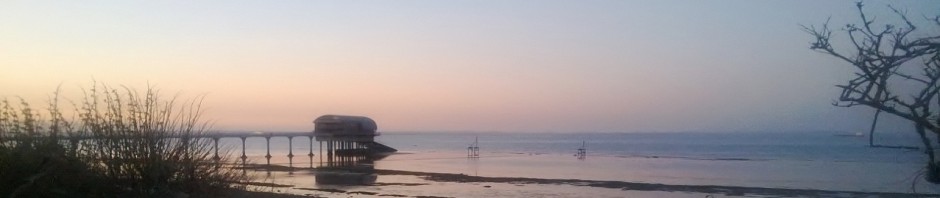
Each morning invites you to be open and aware, as spacious as the sky that passes through you, recognizing “the precious nature of each day,” in the words of the Dalai Lama. No matter how frenzied you feel, no matter how shoved and strangled by the rush of events, you are standing in a single exquisite moment. No matter where you are, no matter how lost, you are standing at the perfect center of four directions. No matter how off-kilter you feel, you are standing in a place of perfectly balanced forces. Even if you feel abandoned by all that might comfort you, you are held in the embrace of what you cannot see.
Kathleen Dean Moore, adapted from Take Heart: Encouragement for Earth’s Weary Lovers, in an extract published in Tricycle Magazine, July 2022
What we are part of goes back and back, and on and on. I’m not sure if it has a beginning or an end, actually. It is indestructible, being just what comes to be, even if that is the coming to be of an ending, or many endings. That balance, that helpless all rightness that underlies all that appears to be so perilous and contingent, is always there. There isn’t anything that has to be done, or refrained from, in order to bring it about. It has always been, before all that has been.
One could go on and on like this, and not explain anything. Words just don’t convey what I’m attempting to say. I suppose they may remind someone, but that’s perhaps the best they can do. I’m often reminded of my frustration when first reading Jiddu Krishnamurti: his words were wonderful, hinting at the very thing I’d been longing for, but there was no practice, no method, not even the suggestion of a pill one might take.
What Krishnamurti was writing about was choiceless awareness, the quality of openness to what is, just as it is, in the instant that it is perceived. Wes Nisker:
Choiceless awareness allows the meditator to see how our experience creates itself; how sense impressions, thoughts, and feelings arise without our willing them; how they interact and influence each other. By engaging the quality of choiceless awareness, we can extract ourselves from the contents of what we think and feel and start to explore how we think and feel.
The tool, the means to choiceless awareness, the thing I’d been looking for all those years ago is vipassana, which at its simplest is really no more than mindfulness. “Vipassana, where you’re taught to cultivate a quality of mind called ‘mindfulness’… [is] simply a state of clear, non-judgemental, and undistracted attention, moment by moment, to the contents of consciousness.” (Sam Harris, on the Waking Up app)
Now, mindfulness is a word that has come to be used, and misused, over and over for most of this century. Nisker writes (ibid.) a few pages later, “As mindfulness spreads into many corners of our culture, it would be unfortunate to forget the original and most significant use of this power of mind—as the key to self-awareness and spiritual liberation.”
To sit still, watching no more than the in and the out breath, hearing no more than the sounds from the window, feeling the weight and presence of the body against the good earth beneath the building, noticing thoughts as they rise and fade; nothing else is needed. It is just that simple, and yet it is the work of a lifetime. Of course it has to be learned, like anything else, and there are better and worse ways to begin. I’ve included an Advice page on this site.
 An Open Ground